

Why the BRICS Jaipur Declaration Won't Get You a Visa
Nine countries signed up to "seamless travel" in Jaipur, but every one of them kept full control of its own visa counter.

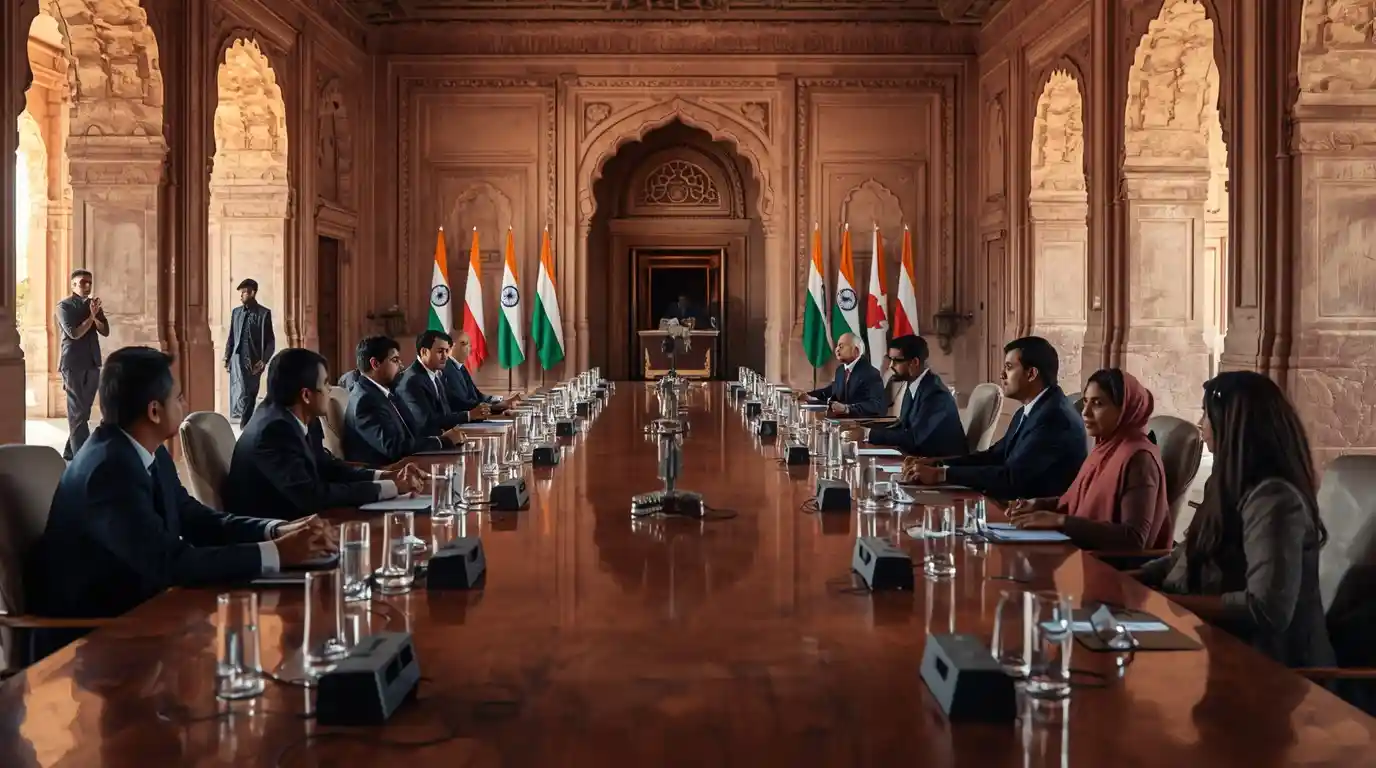
The BRICS Jaipur Declaration was adopted by consensus on Friday, 21 August, closing a tourism ministers' meeting in the Rajasthan capital held under India's 2026 chairship of the grouping. Union Minister for Culture and Tourism Gajendra Singh Shekhawat chaired the session. Nine member states sent delegations — Brazil, China, Ethiopia, India, Indonesia, Iran, Russia, South Africa and the UAE.
The document rests on four priorities: artificial intelligence in tourism, sustainable and responsible travel, skilling the tourism workforce, and what the ministers term seamless travel facilitation. That last phrase is the one that will catch most eyes, and it's also the one that needs the most careful reading. Nothing agreed in Jaipur hands you a single visa that works across all nine countries.
Shekhawat was direct about that limit: visa policy stays the business of each individual government. What members agreed to instead is friction reduction — better digital processes, clearer information, faster handling. So for an Indian passport holder eyeing Cape Town, São Paulo or Addis Ababa, the paperwork doesn't disappear. It may simply get less painful, and gradually.
Who Was in the Room in Jaipur
Alongside Shekhawat sat Gustavo Costa Feliciando, Brazil's Tourism Minister; Reza Salehi Amiri, Iran's Minister of Cultural Heritage, Tourism and Handicrafts; Patricia De Lille, South Africa's Tourism Minister; and Abdulla Bin Touq Al Marri, the UAE's Minister of Economy and Tourism. India also used the margins for one-on-one talks with Brazil, Iran, South Africa and the UAE — the sort of bilateral meeting where route deals and joint marketing actually get shaped, long before any communique is signed.
This year's tourism track ran under the theme "Building for Resilience, Innovation, Cooperation and Sustainability". Bureaucratic on the surface, sure, but a fair summary of what tourism ministries now lose sleep over: sudden shocks, thin operator margins, and destinations pulling in more visitors than they can physically absorb.
What the BRICS Jaipur Declaration Actually Covers
Strip away the diplomatic phrasing and you're left with a shared to-do list. Each of the four strands asks governments to work on something specific, and a couple of them could show up in ordinary travellers' lives sooner than the rest.
AI That Helps You Get There
Members agreed to treat AI and digital tools as safe, responsible and human-centred — wording that matters, because it rules out a free-for-all. The named use cases are practical ones: destination management, travel facilitation, visitor services and multilingual communication. In plain terms, that points to helplines answering in Hindi or Portuguese, crowd forecasting at overloaded monuments, and application portals that stop demanding the same document three times over.
Growth That Reaches the Villages
India framed tourism as a delivery mechanism for Viksit Bharat 2047, its goal of a developed economy by the centenary of Independence. The logic is that tourist spending travels past the metros into small towns and remote districts, paying hotel staff, guides, artisans and farmers. The sustainability language nudges members towards heritage protection and lighter-footprint travel rather than chasing raw arrival counts.
Training the People Who Serve Tourists
Skilling got a pillar of its own, which isn't a token gesture. Tourism remains one of the few sectors where a short course converts reliably into a job — hospitality, guiding, driving, food service. Sharing curricula and standards across nine countries is unglamorous work. It's also the piece of this declaration most likely to eventually show up in somebody's monthly salary.

Why Your Visa Queue Isn't Going Anywhere
Worth being blunt here, because "seamless travel" invites the wrong assumption. There is no BRICS answer to Schengen in this text, and nobody in Jaipur suggested otherwise. Visas remain sovereign. India already runs an e-visa system that lets travellers from a long list of countries apply from home or office, and that model — online, document-light, quick — is broadly the direction the grouping says it wants to head. The BRICS Jaipur Declaration doesn't override a single national rule.
The realistic wins over the next few years are dull but genuinely useful: more members accepting fully digital applications, fewer in-person appointments, longer validity periods, mutual recognition of qualifications like tourist-guide certification. None of that makes a front page. All of it shortens the gap between deciding to travel and actually boarding.
Shekhawat put the broader case for the effort in people terms rather than policy terms.
Tourism ultimately connects people. It creates opportunities for communities, enables cultural exchange, and allows citizens of our countries to understand one another beyond the formal relationships between governments.
What This Adds Up to for Indian Travellers
Planning a trip to a BRICS country this winter? Plan it exactly as you would have last week. Nothing signed on Friday changes a visa fee, a rupee of airfare or a document checklist today. What could shift over the next few seasons is the ease of the process — and possibly the spread of destinations Indian tour operators bother to package, since ministries that sign joint statements often follow up with marketing money.
What to Watch in the Months Ahead
Three signals will tell you whether Jaipur produced substance or stationery:
- Whether India's chairship converts this into a working group with actual deadlines attached
- Whether any member announces a concrete visa relaxation and credits the Jaipur talks
- Whether the AI commitments harden into shared standards or stay a paragraph
The BRICS Jaipur Declaration is a starting document, not a finished one, and it will be judged on follow-through rather than on the day it was signed. If you're travelling to a member country soon, apply early and check that specific embassy's current rules — that remains the only system deciding whether you get in.



Comments 0