

Why a 1967 Wallpaper Firm Bought a Wood Wall Panels Brand
Wolf-Gordon, sold to private equity just fifteen months ago, has bought two founder-led surface brands in six weeks — and the category it chose is already all over Indian offices.

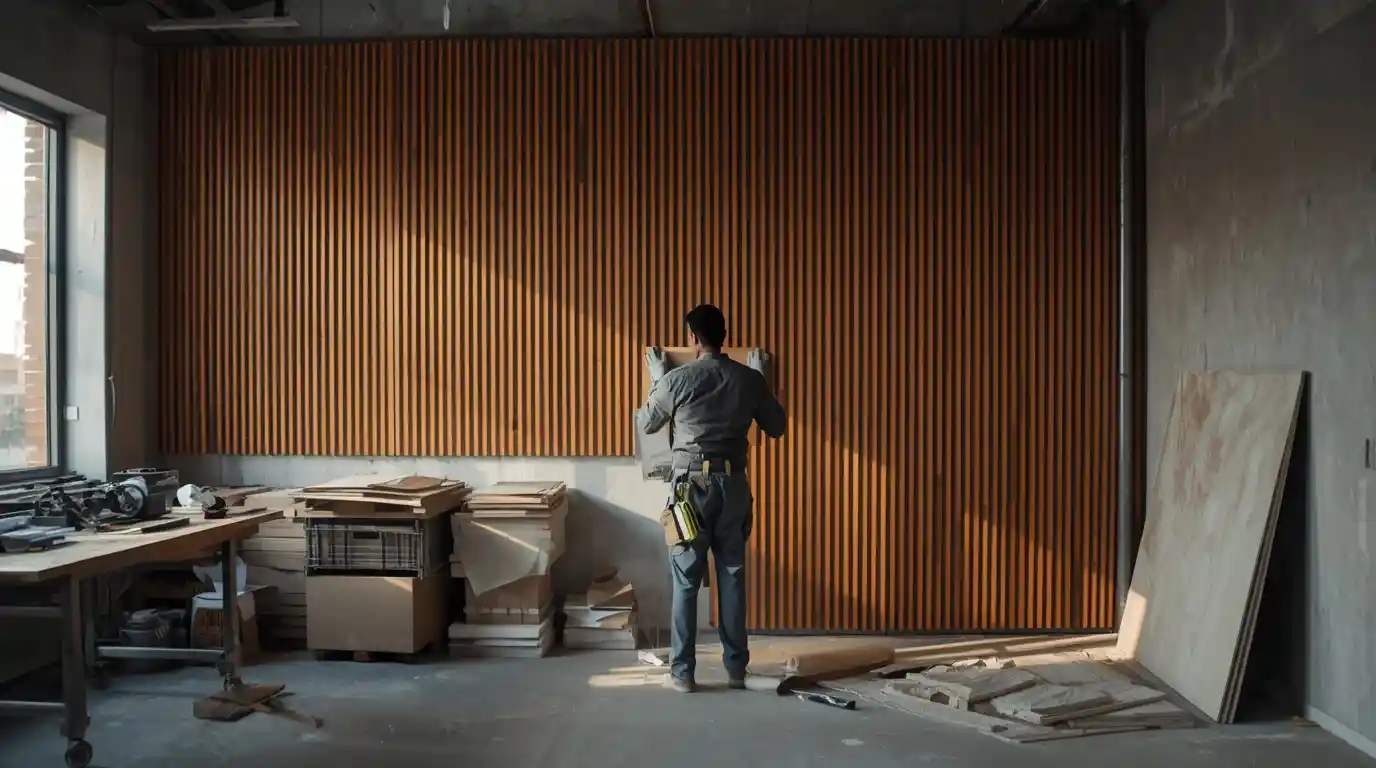
Wolf-Gordon, an American commercial wallcovering house founded in 1967, has just bought its way into wood wall panels and custom digital printing. On August 13 the company folded two separate deals into a single announcement: Andor Willow, which sells ready-to-install slat panels and room dividers, and Look Walls & Interiors, a made-to-order wallcovering studio in Dallas, Texas. Terms were not disclosed for either transaction.
The sequence is the interesting bit. Wolf-Gordon was itself sold in May 2024 to Charger Investment Partners, a private equity firm based in El Segundo, California, which picked it up from a previous PE owner, Saw Mill Capital. Fifteen months on, the company that got acquired is the one writing cheques — two of them, roughly six weeks apart.
If you specify finishes for offices, hotels or hospitals in India, this is not just American trade news. The fluted timber panel sitting behind every second reception desk in Gurugram and Bengaluru falls squarely in the category Wolf-Gordon has now paid to own. When surface brands consolidate, what actually changes for a specifier is the catalogue, the lead time, and who answers when a warranty claim lands.
Two Deals, Six Weeks Apart
Andor Willow went first, announced on June 22. It makes ready-to-install wood wall panels, acoustical slat systems and freestanding room dividers, and it sells them through a direct e-commerce front rather than the usual dealer network. Founder Sascha Tettero-Weyman has moved into a full-time role at Wolf-Gordon, while Devon Howard stays on as the brand's chief executive.
Look Walls & Interiors followed on August 4. Co-founders Lindsay White and Lester Blumenthal continue to lead the studio, which produces bespoke printed wallcoverings from a purpose-built design and production facility in Dallas and works across hospitality, corporate, healthcare and education projects. Both businesses keep their own names, at least for now.
What Wood Wall Panels Add to the Mix
Wolf-Gordon's catalogue was broad but essentially flat. CLAIR wallcoverings, RAMPART wall protection, Scuffmaster paint, Wink dry-erase surfaces, GATHER acoustical materials, upholstery and drapery textiles — all of it lives on the plane of the wall. The company has collaborated with designers including Karim Rashid and Petra Blaisse, so ideas were never the shortage. Depth was: the ribbed, warm, sound-absorbing timber that has run through every mood board since open-plan offices got loud again.
Buying that capability is faster than building it, and it arrives with a customer list attached. Look Walls does the mirror-image job — taking a designer's one-off idea and printing it at project scale, which is the corner of the business where margins hold, because nobody can price-shop a bespoke mural.
Rick Wolf, the chief executive, kept the reasoning simple in the announcement, pointing at portfolio breadth and the founder-led character of both targets rather than at cost savings or synergies — usually a tell that this is a growth play rather than a cleanup.
These acquisitions expand our product portfolio and the markets we serve, and both are founder-led brands built on the same commitment to design and customers that defines Wolf-Gordon.

The Private Equity Playbook Behind It
Strip away the design language and this is a textbook buy-and-build. A fund acquires a platform with a trusted name and a national sales force, bolts on smaller specialists that plug product gaps, then sells the combined group at a bigger multiple. BlackArch Partners advised on the 2024 sale. Kimberly Pollack, co-founder and partner at Charger, called both targets exactly the kind of founder-led businesses the firm looks to back and scale.
Indian readers will recognise the shape of it. The same logic has driven roll-ups in domestic modular furniture and building materials here, where a funded platform absorbs regional workshops so it can sell one specification across an entire portfolio of sites.
What This Changes for Indian Projects
Nothing here lands in an Indian project overnight. Wolf-Gordon sells through US account executives, and neither acquired brand has a distribution footprint in this market. But specification habits travel fast through global design practices working on Indian campuses, and three effects are worth tracking on live jobs.
Slat panels are already a local product
Acoustic timber slat panels are made and sold widely across India by domestic fabricators, MDF processors and online sellers, usually at a fraction of an imported system's landed cost. A US brand consolidating the category does not shut that door. What it does is raise the bar on what clients expect: finish consistency, published acoustic data, real fire test reports.
Imported surfaces still cost time and duty
If the client insists on the imported original, budget for customs duty, freight and a lead time counted in weeks rather than days. Before you sign off on the sample, ask for:
- tested acoustic absorption values, not brochure adjectives
- fire and smoke ratings a local fire consultant will actually accept
- humidity performance, which matters far more in Mumbai or Kochi than in Dallas
- written lead times, including the replacement panel you will inevitably need
Founder brands rarely stay untouched
Both founding teams are staying on, which is the standard day-one message in every deal of this type. The thing to watch is year two, when ranges get rationalised and slower-moving colours quietly vanish. If you are specifying a finish from either brand for a project completing in 2027, get the exact shade and profile confirmed in writing now, not later.
What to Watch Next
Two acquisitions in six weeks is not a pause, it is a pace. Expect more bolt-ons in adjacent surfaces — acoustic felt, decorative metal, engineered laminates — and expect wood wall panels to graduate from an online niche into the sample binder in every large practice. If you are running a fit-out here, the useful move is unglamorous: ask your supplier who owns the brand, ask what changes over the next twelve months, and keep a comparable local product priced in the BOQ as a fallback. Consolidation tends to help consistency. It almost never helps the rate.



Comments 0