

Why Former BioWare Developers Bet on a Paranormal Mystery
Three Mass Effect and Dragon Age veterans left the biggest names in Canadian gaming to build a small Edmonton studio and a neon-noir ghost story called The Eventide.

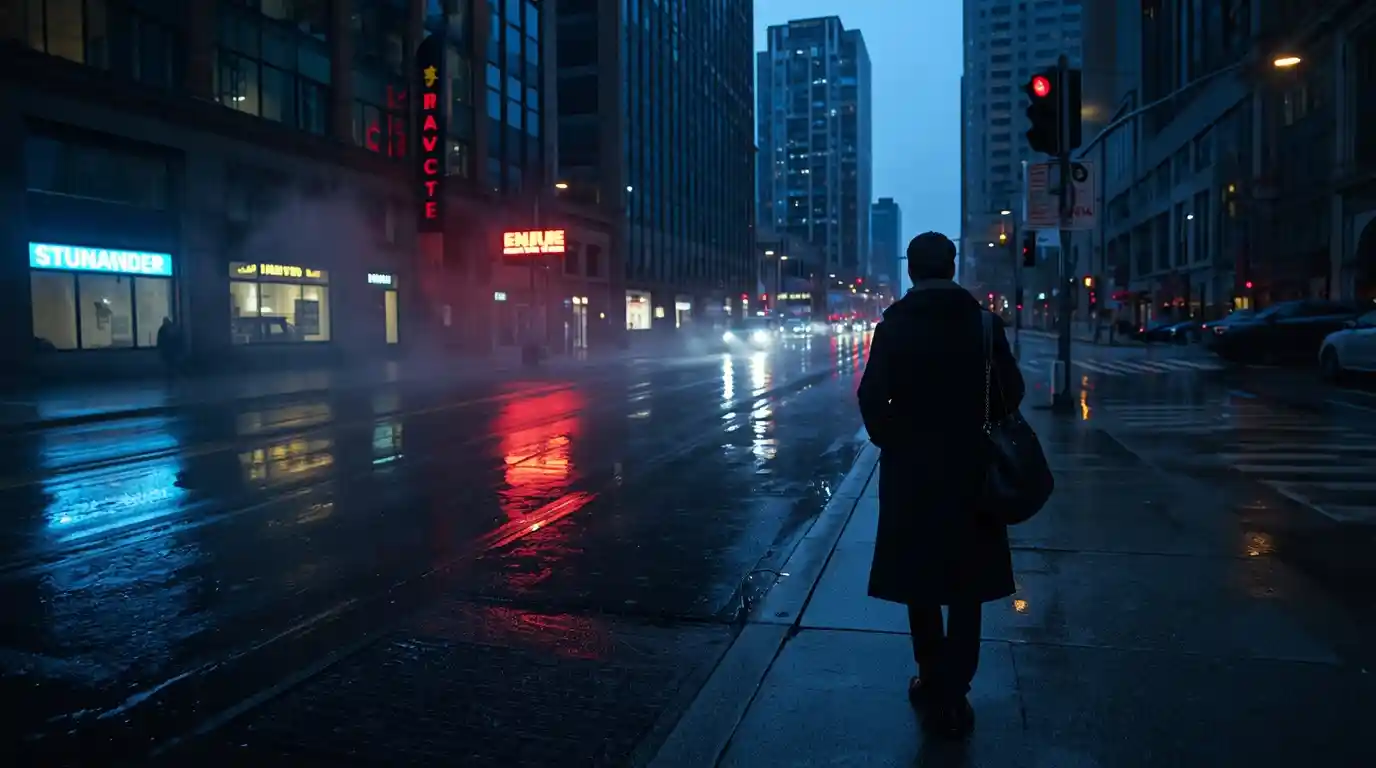
Three former BioWare developers have set up a small studio in Edmonton, and their first game is a neon-noir mystery about a covert team of paranormal investigators working a Canadian city after dark. The studio is called Studio Reset. The game is called The Eventide, and it was revealed in late July for PC, with no release date attached and no publisher announced.
The founders are Kaelin Lavallée, producer and creative director; Kristine "Kris" Schoneberg, design director; and Francis Lacuna, art director. Between them, their credits cover the Mass Effect trilogy and its expansions, Dragon Age, Dragon Age II, Dragon Age: Inquisition, Anthem, The Long Dark and Nightingale. That is roughly two decades of work on games with budgets most independent teams will never touch.
What makes the timing worth a second look is the state of the building they came from. BioWare's Edmonton office, once the most famous game studio in Canada, has reportedly lost at least half its staff and now sits below 100 people, according to PC Gamer. A restructuring in early 2025 alone accounted for more than 100 roles through a mix of layoffs and transfers to other Electronic Arts projects.
The three names behind Studio Reset
Studio Reset went public in May, with a name that reads like a mission statement. The founders have described the group as people who had worked together long enough to trust each other before any money was on the table, which is usually the hard part of a startup rather than the easy part. Early development has drawn support from the Canada Media Fund, the federally backed body that helps finance Canadian screen and interactive projects.
That CMF backing matters more than it sounds. It is one of the few funding routes in this country that does not require handing creative control to a publisher, and it is a big reason Canadian teams can survive the eighteen-month stretch between "we have an idea" and "we have something to show."
What The Eventide is, piece by piece
Details are still thin by design — the studio has said it plans to reveal the game in phases rather than all at once. Here is what has actually been confirmed.
A Canadian city, lit like a crime scene
The setting is a stylized Canadian cityscape rendered in what the studio calls neon-noir. The specific city has not been named. That alone is unusual: Canadian studios have spent thirty years building Chicago, Los Angeles and invented sci-fi capitals, and comparatively few have set a game in a place that looks like where the team actually lives.
Investigators who don't agree on what they saw
Players control a hidden unit that monitors, studies and intervenes in strange cases. The reveal leans on a hook that each investigator perceives a different version of the truth — a structural idea rather than a cosmetic one, and the sort of thing that gets cut in a large production because it doubles the writing and testing load.
PC first, and nothing promised
The Eventide is in early development for PC, with a Steam page live. No console versions, no window, no price. Treat any "coming 2027" chatter you see as speculation.

Why former BioWare developers went small
The pitch from the team is not nostalgia. It is arithmetic. A large publisher can respond to a broken feature by adding people and money; a three-person studio cannot, so it either solves the problem cheaply or drops it. That constraint is what makes an idea like conflicting witness accounts survivable at this scale and unfundable at the other one.
Because we are indie, we can take these sort of creative risks that maybe were not available to us in larger companies.
The same founders have pointed out that AAA studios throw money at problems while small teams have only each other — the origin of the line that has followed this story around, about being willing to do something most people aren't.
The numbers under Canada's game industry
Zoom out and Studio Reset looks less like an outlier and more like a symptom. Industry association figures put 821 video game companies operating in Canada in 2023–24, a nine per cent drop and 78 fewer than the 2020–21 peak, alongside about 1,250 fewer full-time jobs than in 2021 — a 3.5 per cent decline. Meanwhile Electronic Arts itself has been taken private in a US$55-billion deal led by Saudi Arabia's Public Investment Fund, financed partly with roughly US$20 billion in borrowed money. Debt that size usually gets paid down by cutting costs.
So the company count falls while the studio count of very small teams quietly climbs. Fewer employers, more founders. That is the shape of the shift.
What to watch from here
Wishlist The Eventide on Steam if the premise appeals — for a team this size, wishlist volume is the single number that determines whether a publisher or a further funding round becomes available, and it is the cheapest thing a Canadian player can do to keep a Canadian studio alive. Beyond that, watch for two signals over the next few months: a named city for the game's setting, and any announcement of a publishing or funding partner. The first tells you the game is far enough along to commit; the second tells you it will get finished.


Comments 0