

Why Hire a Professional Organizer to Clear Your Own House?
Canadians are discovering that the hardest part of downsizing isn't the moving truck — it's deciding what a lifetime of belongings is actually worth.

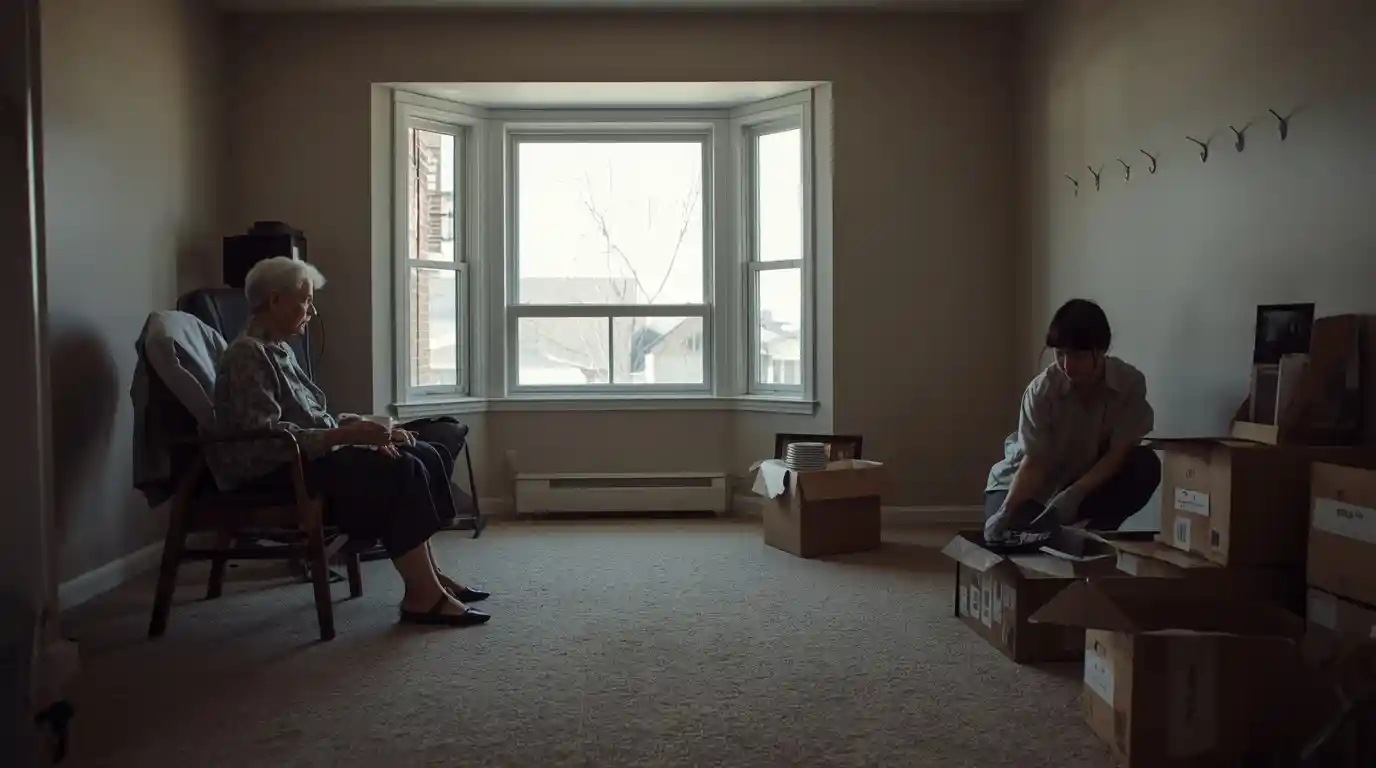
Hiring a professional organizer sounds like a strange thing to pay for — right up until you're standing in a basement at nine at night, deciding what happens to forty years of dishes. CBC Radio's The Current took up that problem this month, and the conclusion was blunt. The hard part of downsizing isn't the truck or the boxes. It's the deciding, and most of us are bad at it alone.
The going rate isn't trivial. Organizers and senior move managers in Canada commonly quote somewhere between $50 and $150 an hour, and some sell flat-rate packages for a whole-house sort. For a three-bedroom home that has quietly absorbed three decades of stuff, that adds up to a few thousand dollars. Which is precisely why most families try to do it themselves first, then stall for a year.
What makes the invoice easier to stomach is the other number: what your belongings are actually worth. June Cotte, a marketing professor at Western University's Ivey Business School in London, Ont., told CBC that older Canadians are frequently startled by how little anyone will pay for the things they treasure most. The formal dining suite, the china service, the good silver — the market moved on, and thirty seconds on a resale app will confirm it.
Why Letting Go Feels Like Losing Part of Yourself
Cotte's central point is psychological rather than financial. Handing over a possession can feel like throwing away a piece of your own identity. That's why generic decluttering advice — the six-month rule, the ruthless purge, the one-in-one-out system — falls apart inside a real house. You aren't sorting objects. You're sorting the evidence of a marriage, a career and three kids, and no tidy rule survives your father's toolbox.
It also explains why an outsider helps so much. A stranger holding the teacup carries no memory in it. They can ask the question you can't manage: does this belong to the life you live now, or the one you used to live? Cotte's practical advice is to start giving things away while you're alive and well, instead of leaving a full house of decisions to your children.
What a Professional Organizer Actually Does
The work goes well beyond tidying, and in Canada it overlaps heavily with a specialty called senior move management. Practitioners are listed through directories such as the National Association of Senior Move Managers, and most offer a free first visit. The job typically breaks into three stages, and only one of them involves packing tape.
Sorting into keep, sell, donate and discard
This is the slow part and the reason people hire help. A professional organizer works room by room on a schedule, keeps the pile moving when a decision stalls, and absorbs the friction that would otherwise land on a son or daughter. Families report the same thing repeatedly: the arguments drop sharply once a neutral third party is running the clock.
A pricing reality check on the good stuff
Some older adults use agencies to sell possessions to buyers who'll genuinely value them, CBC reported. A good organizer knows which categories still move — tools, mid-century furniture, jewellery, certain art — and which don't. Expect honesty about the mahogany wall unit. Hearing "this is worth about $40" from a professional lands very differently than hearing it from your kid.
Floor plans, packers and the first night
The last stage is logistics: measuring the new suite, deciding which sofa physically fits, booking movers, then unpacking and setting up the kitchen so the first evening feels livable. That final step matters more than it sounds. Arriving to made beds and hung pictures is often the difference between a move that settles and one that gets regretted for months.

Is Paying Someone $150 an Hour Worth It?
Run the comparison honestly. A stalled downsize means another year of property tax, heating, insurance and maintenance on a house that's too big — easily $10,000 or more annually in most Canadian cities. Add a rented storage locker at roughly $150 to $300 a month for boxes nobody ever opens again, and the professional fee starts looking less like a luxury and more like a hedge against drift.
Why So Few Canadians Actually Move
The great downsizing wave has been slower than predicted. Coldwell Banker Horizon Realty puts it at roughly one in ten Canadians planning to downsize this decade, noting that commissions, land transfer taxes and moving or renovation costs can eat up to 15 per cent of the sale price. The Globe and Mail has reported that seniors are staying in large houses into their 80s, partly because smaller options simply aren't there.
Meanwhile, more than $1 trillion is expected to pass from Canadian boomers to younger generations, according to CBC News. The cash transfers cleanly. The contents of the house do not. Someone eventually stands in that basement, and the longer the decisions are deferred, the more likely it's a grieving adult child doing it against a closing date.
How to Start Before It Becomes a Crisis
Vancouver-area organizer Linda Chu of Out of Chaos frames the goal in a way worth borrowing, whether or not you hire anyone.
Thoughtful downsizing is about aligning what you keep with the life you're actually living now.
A few moves that cost nothing:
- Ask your adult children now, in plain terms, what they'd genuinely want — and believe the answer.
- Photograph the sentimental items you won't keep. The memory survives; the sideboard doesn't have to.
- Start with one low-emotion zone, like the linen closet, to build momentum before the photo albums.
- Get resale prices before you assign value, not after.
- Book a free consultation with two organizers and compare hourly versus package pricing.
If you're over 70 in a house you no longer use fully, do one thing this month: pick a single room and finish it. And if a parent's home is heading toward an eventual sale, raise it now, while it's a conversation rather than a deadline. Paid help is worth pricing out — but the expensive mistake is waiting until someone else has to decide for you.




Comments 0