

Your 1982 Copper Penny Needs to Weigh 3.11 Grams
The famous $20,000 penny is real, but only two have ever been authenticated — and the check takes a kitchen scale and thirty seconds.

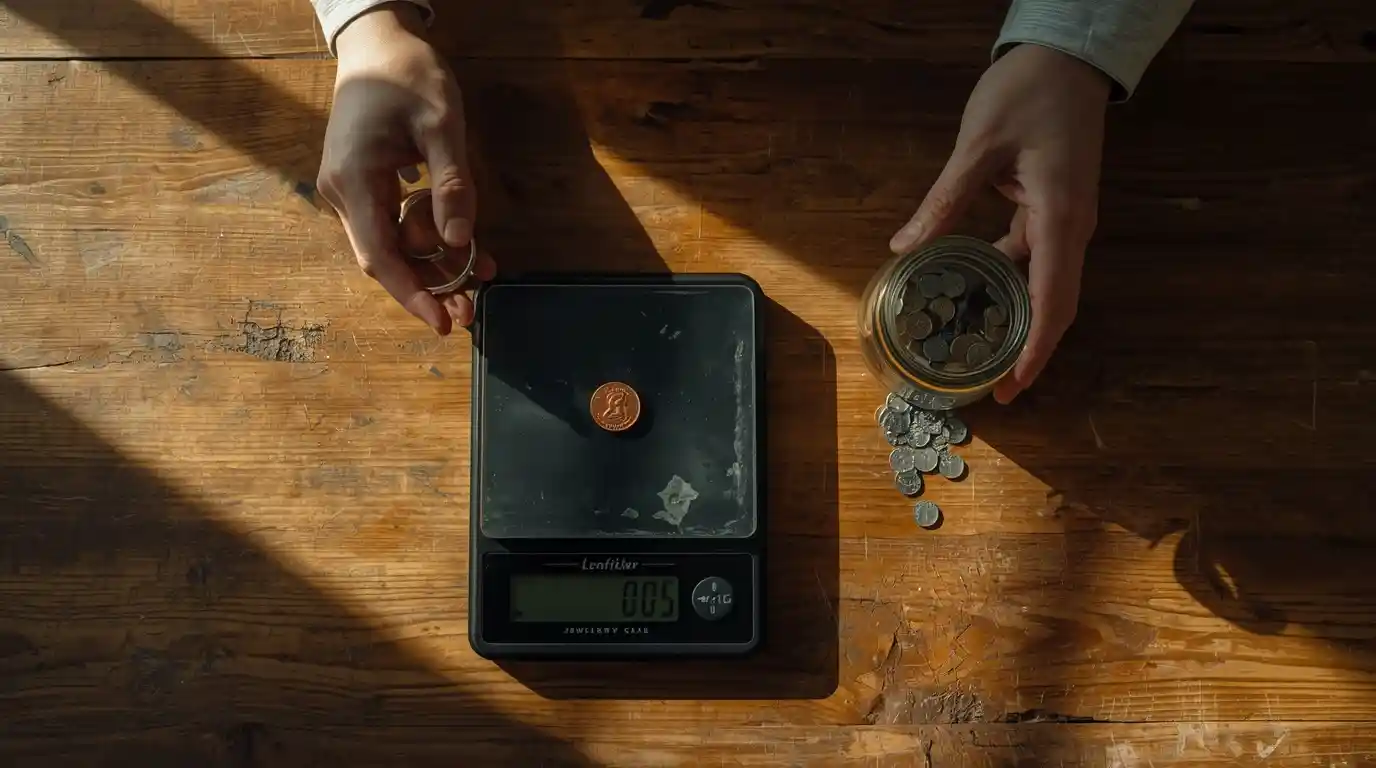
Somewhere in a jar in your garage there is probably a 1982 copper penny, and the internet has spent years hinting it might be worth $20,000. It almost certainly isn't. The odds are bad enough that calling it a lottery ticket would be generous. But the story behind that number is real, and checking your coin takes about thirty seconds and a cheap scale.
Here is the setup. 1982 was the year the U.S. Mint stopped making the one-cent coin out of bronze and started making it out of zinc with a thin copper coating. The switch was staggered across facilities and dragged across the whole calendar year, which is why collectors count seven different regular 1982 cents instead of one. Two metals, two date styles, two mints, all jumbled together in circulation.
One combination was never supposed to exist: a Denver cent with the small date, struck on a leftover copper blank. Exactly two have ever been authenticated. The first sold for $18,800 in August 2017, the second for $10,800 in April 2019, both through Heritage Auctions. That is genuine money. It is also well under the $20,000 figure that keeps circulating, and both coins were found by people who knew precisely what they were hunting.
Why 1982 Is the Strangest Year in Your Change Jar
Copper prices climbed through the late 1970s until a bronze cent cost more than a cent to produce. The Mint's fix was a zinc core with copper plating — same look, roughly 80% less metal cost. The first plated zinc cents were struck at the West Point facility on January 7, 1982, and the last business-strike bronze cents came off the presses late in the same year. For months, both were pouring into circulation side by side.
What a 1982 Copper Penny Has to Have
Three things must be true simultaneously. Miss any one of them and you are holding a coin worth exactly one cent. Most people get excited at step one and stop reading, which is how these rumors survive.
It Weighs 3.11 Grams, Not 2.5
Bronze cents weigh about 3.11 grams; plated zinc cents weigh about 2.5 grams. That gap is enormous by coin standards and no scale in a kitchen drawer will miss it. A $12 digital jeweler's scale that reads to a hundredth of a gram settles the question. Copper cents also ring differently when dropped, but weight is the only test worth trusting.
It Has a D Under the Date
The valuable error came out of Denver, so there must be a small D stamped below the year. Philadelphia cents from 1982 carry no mint mark at all, and a Philadelphia small-date bronze cent is a normal, common coin. Plenty of people find a heavy 1982 penny, see no mint mark, and assume they've won. They haven't.
The Date Is the Small One
This is where most claims collapse. On the large date, the 9 and the 8 sit noticeably higher than the 1 and the 2. On the small date, all four numerals line up evenly across the top and the 2 has a flatter, more compact tail. You need decent light and magnification. Compare against a known example rather than guessing from memory.

What the Two Known Coins Really Sold For
The first authenticated example surfaced on November 23, 2016, found by collector Paul Malone. The accepted explanation is mundane: a leftover bronze blank sat in a Mint hopper and got fed through dies meant for zinc. Note the second sale figure — $10,800, roughly 43% below the first. With a population of two, there is no real market, just whoever happens to be bidding that afternoon.
Why Melting Copper Pennies Is a Federal Offense
Since December 14, 2006, federal regulations under 31 C.F.R. Part 82 have barred melting cents and nickels for their metal. Treasury acted when soaring copper and zinc prices pushed the scrap value of both coins past their face value. Penalties run to a $10,000 fine, up to five years in prison, and forfeiture of the coins. Small amounts for personal, educational or jewelry use are carved out.
Does the Penny's Retirement Make Yours Worth More?
The Mint held a ceremonial final strike in Philadelphia on November 12, 2025, closing out 232 years of circulating one-cent production. By then each penny cost about 3.69 cents to make, up from 1.42 cents, and ending production saves roughly $56 million a year. The coin remains legal tender. But scarcity drives value, and there are still hundreds of billions of pennies out there — retirement makes yours historic, not rare.
So do this: buy a small digital scale, weigh anything dated 1982, and set aside whatever reads above 3 grams. Then look for the D and study the date shape. Only if all three line up should you spend money on grading, which runs $30 to $60 per coin at PCGS or NGC. Everything else is worth a cent, and that is the honest answer.




Comments 0