

A £20m Virgin Mary Statue for a Village of 130 People
One private couple in central Poland spent roughly £20m on a 55.6-metre monument that now towers over a hamlet of fewer than 150 residents.

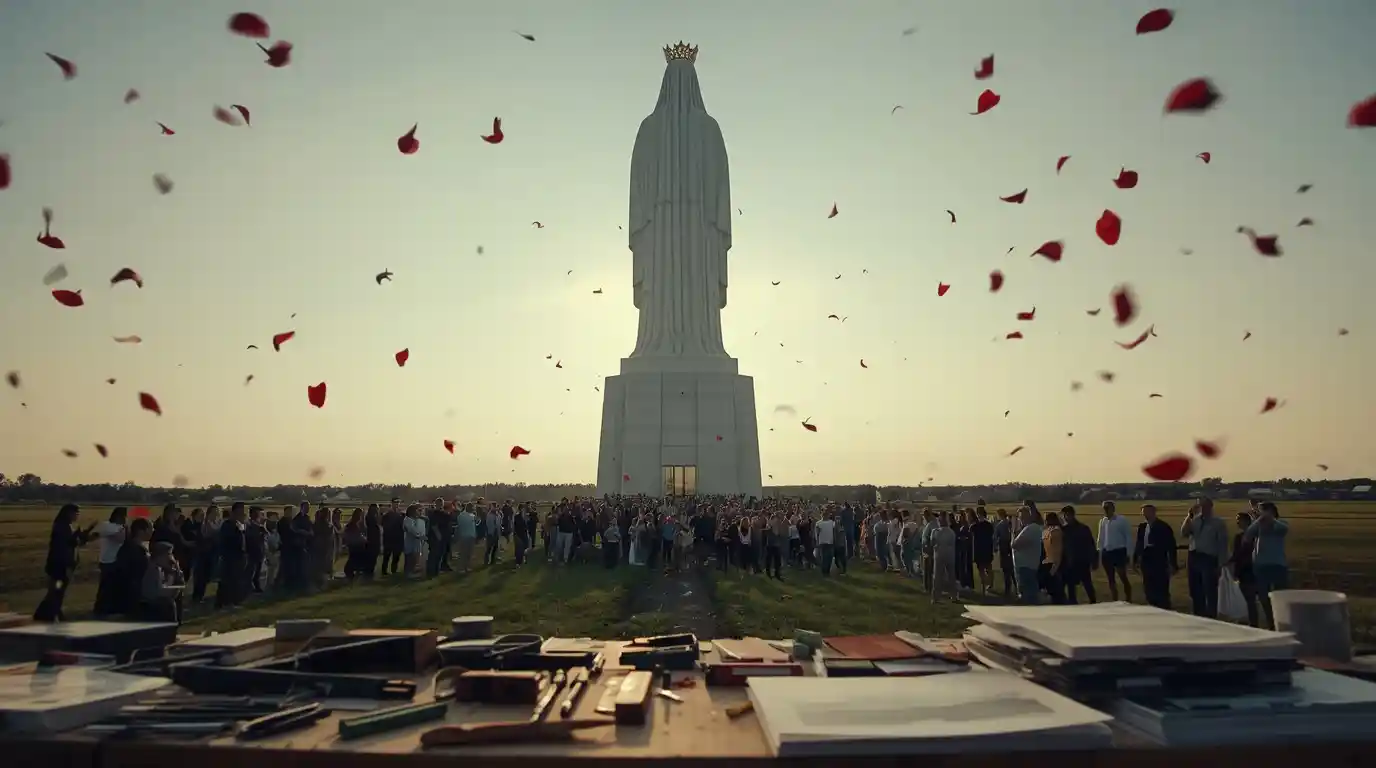
A village of roughly 130 people in central Poland is now home to the tallest Virgin Mary statue in Europe, and the Church did not pay a penny towards it. The monument at Konotopie rises 55.6 metres from the ground to the top of the crown — a 40.6-metre figure standing on a 15-metre plinth shaped like a crown — and it was unveiled on 15 August, the Feast of the Assumption, before a crowd that outnumbered the entire village many times over.
The bill came to about 100 million złoty, according to Notes From Poland, which works out at roughly €23m, or somewhere near £20m at current rates. It was met by a single couple: Roman and Grażyna Karkosik, who live in the area and almost never speak to journalists. They have described the monument as an expression of their gratitude to God after Roman fell ill. Eighteen months of building work, one concrete figure, no parish collection, no public appeal.
So why should this matter to anyone in Britain? Because it is a neat measure of three things at once — what private fortunes now build when neither the state nor the Church will, how record-chasing monuments have become a tourism plan for places with no other draw, and how a country's religious architecture can keep getting bigger while the congregations inside its churches keep getting smaller.
Where Is Konotopie, and Why There?
Konotopie is a farming settlement in central Poland with fewer than 150 residents, inside the Włocławek diocese. It has no medieval shrine, no miracle story, no pilgrim tradition to build on. The site was chosen for personal reasons rather than strategic ones — it is where the Karkosiks are based. Bishop Krzysztof Wętkowski of Włocławek led the inaugural Mass, and the ceremony ran to traditional Polish music and helicopters scattering red rose petals over the crowd.
Among those present was Lech Wałęsa, the 82-year-old former president and Solidarity leader, who posted photographs from the site on social media.
We sinners ask Our Lady of Mercy to take care of the whole nation.
The Couple Behind the Virgin Mary Statue
Roman Karkosik started out manufacturing plastic bottles in the 1990s, then made a far larger fortune on the Warsaw Stock Exchange by buying up undervalued companies during Poland's chaotic post-communist sell-off. He became one of the richest people in the country, though his wealth has shrunk since its peak. He and his wife have kept an unusually low profile for people of that means, rarely giving interviews.
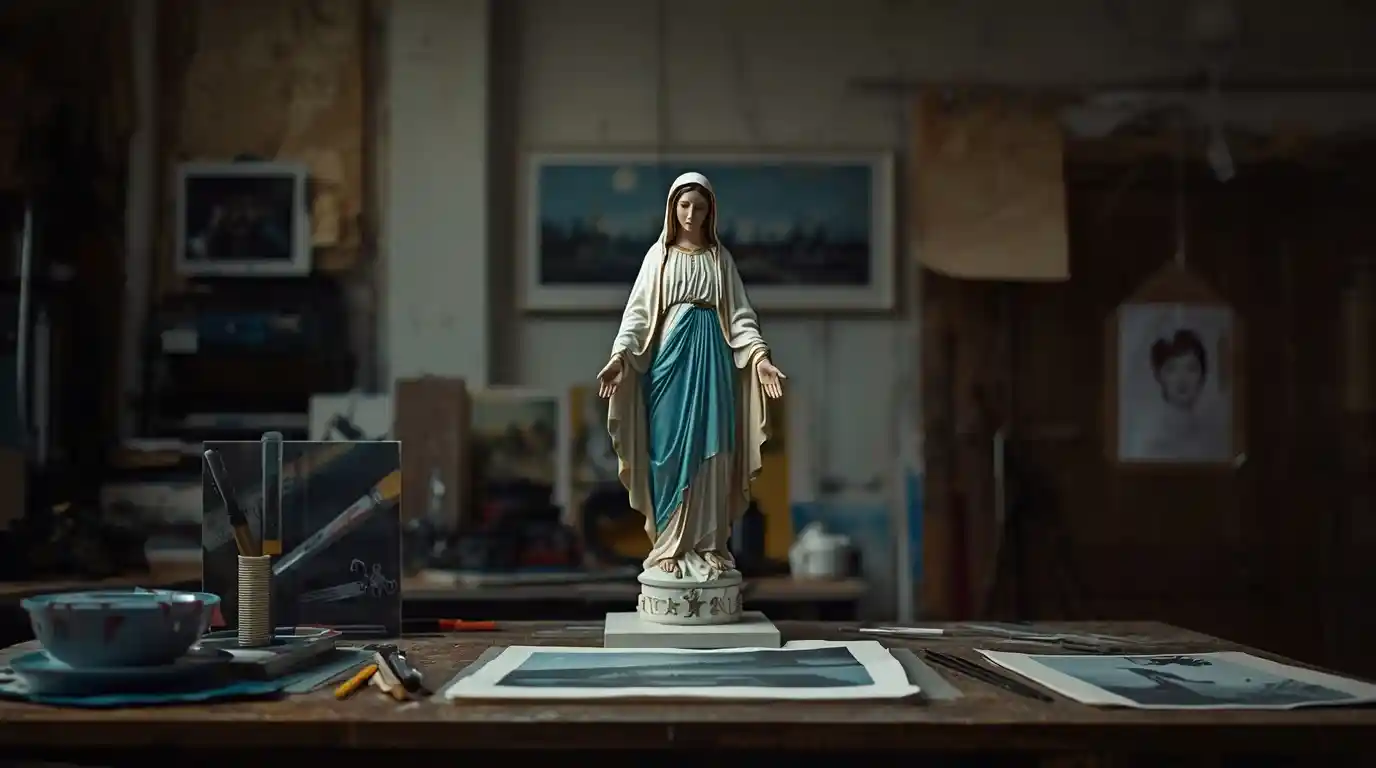
The sculpture began life as a two-metre model by Adam Jakub Matejkowski, with Bartłomiej Niesłuchowski as chief engineer. One small detail says a lot about the scale of the job: the material for the moulds had to be manufactured in Italy, because no Polish supplier could handle it.
How It Compares With Europe's Other Giants
Numbers this large stop meaning much without something to measure them against. Three comparisons do the job.
Christ the King, Świebodzin
Poland's previous record-holder went up in 2010 in western Poland: a 36-metre Christ, including a three-metre gilded crown, sitting on a 16.5-metre mound for a combined 52.5 metres. It was designed by Mirosław Patecki, driven by a parish priest, Father Sylwester Zawadzki, and funded largely by donations from parishioners. Konotopie beats it by roughly three metres — so Poland now holds two of Europe's biggest religious monuments.
Christ the Redeemer, Rio de Janeiro
The most photographed statue of its kind stands about 38 metres including its pedestal. The Konotopie figure alone, before you add the crown-shaped base, is taller than the whole Brazilian monument. Globally, though, it is nowhere near the top: the Mother of All Asia – Tower of Peace in the Philippines reaches 98 metres.
The Angel of the North, Gateshead
Britain's best-known large sculpture is 20 metres tall with a 54-metre wingspan, built in 1998 for well under £1m, mostly with National Lottery money. Konotopie is nearly three times the height and cost something like twenty times more — and came from one household rather than the public purse. Two entirely different models of how a landmark gets made.
A Country Praying Less, Building Bigger
Here is the tension worth noticing. Figures from the Polish Church's own statistics institute put Sunday Mass attendance at 29.6% in 2024 — broadly flat over the past three years, but roughly half the 57% recorded back in 1982, and only just above the pandemic low of 28.3% in 2021. Poland is building its most ambitious religious monuments at exactly the moment fewer Poles than ever are turning up on a Sunday.
What Happens to the Village Next
There is a viewing platform inside the crown-shaped base, and entry is free. Local authorities are betting the site becomes both a pilgrimage destination and a straightforward tourist stop, with road and hospitality investment expected to follow. Świebodzin offers the precedent: coach parties, souvenir stalls and a permanent place on the map, though a roadside giant rarely transforms a local economy on its own.
If you are planning a trip to central Poland, check access and opening hours before setting off — a hamlet of 130 has no infrastructure for busy weekends yet, and that is the thing to watch over the next year. Whether the free deck stays free, whether the coaches actually come, and whether Konotopie ends up a genuine shrine or simply a very tall photo stop.
Comments 0