

The Parma Art Heist Looked Perfect. It Was Worthless.
Five men took a Cézanne, a Renoir and a Matisse from an Italian villa in under three minutes — and then spent five months discovering nobody on earth would buy them.

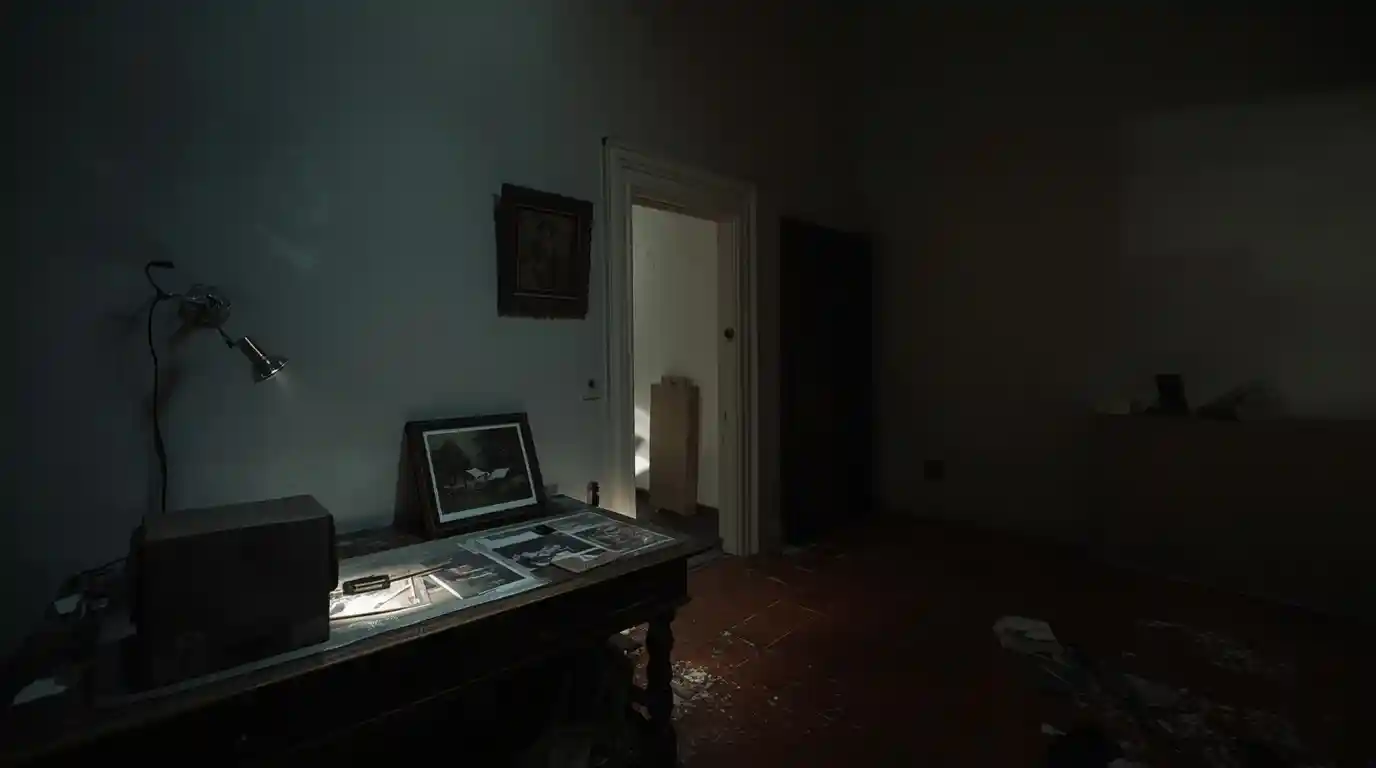
The Parma art heist took about 180 seconds. Three minutes from the sound of breaking glass to figures running back across a dark garden with roughly €9 million of Cézanne, Renoir and Matisse under their arms. Italian police released the security footage this month, and on screen it looks like a professional job — fast, quiet, rehearsed. It was also, in every way that counts, pointless.
The break-in happened in the early hours of 23 March at the Magnani-Rocca Foundation, a private museum housed in a villa at Mamiano di Traversetolo, about 12 miles outside Parma in northern Italy. On 14 August the Carabinieri announced they had arrested five Moldovan nationals, all living in the Parma area, and recovered every one of the stolen works.
The paintings were not in a vault, a freeport or a yacht. Officers found them in the storeroom of a house in Parma, stacked inside a cardboard box that had once held a flat-screen television. For anyone who has ever wondered what actually happens to a stolen masterpiece, that box is the entire answer — and it explains why the gang got nowhere for five months.
Three minutes, one forced door, no alarm
The CCTV shows masked men smashing their way in through the villa's front entrance. Investigators say the group used electronic devices to knock out the alarm, then lifted the pictures straight off the walls and passed them to an accomplice waiting outside before escaping across the gardens. Four men took part in the raid itself, according to the Carabinieri, while a fifth was handed the job of hiding the haul.
Here is what they took, with the values Italian investigators have put on each work:
- Cézanne's "Tasse et Plat de Cerises", a pencil and watercolour still life of a cup and cherries — €6 million, around £5.2 million
- Renoir's "Les Poissons", an oil painting of fish — €3 million, around £2.6 million
- Matisse's "Odalisque sur la Terrasse", an etching — €20,000, around £17,000
That last line is the tell. The gang stopped to take a print worth roughly two-tenths of one per cent of the haul. They were working off a list of famous names, not any real understanding of what sells. And the single most valuable object was a work on paper, which is exactly the sort of thing a fence cannot do anything with.
Why the Parma art heist could never pay
Stealing a well-known painting is the easy bit. Converting it into money is close to impossible, and the reasons split cleanly in two.
You cannot melt down a watercolour
Jewel thieves have an exit route. Gold is melted, stones are recut, and what emerges is untraceable metal and anonymous carats — worth a fraction of the original, but spendable. A Cézanne watercolour has no such trapdoor. Cut it up and you have confetti. Its whole value rests on being the complete, recognisable, thoroughly documented object, which is precisely what makes it impossible to move.
Every serious buyer checks the registers
All three works were logged on Interpol's stolen art database almost immediately, alongside the commercial registers the trade actually uses, including the London-based Art Loss Register. Any auction house, dealer or insurer in Britain or Europe runs those checks before money changes hands. What's left is a private sale to someone who knows exactly what they are buying, for a sliver of the price, with no comeback at all.
The Carabinieri say the gang did try, reaching out through international channels and finding no takers. Lieutenant Colonel Giuseppe Marseglia put their miscalculation plainly.
They thought it would be easy.
The fire extinguisher that gave them away
The Parma art heist unravelled over a piece of fire safety kit. The thieves left behind a pickaxe and a fire extinguisher with the serial numbers filed off. Forensic officers reconstructed those numbers, traced the extinguisher to a particular apartment building, and established that one of the suspects had access to it. Colonel Andrea Pagliaro described the wider operation as complex; the first thread was a label.
Naming the suspects proved faster than finding the pictures, which took searches across Parma and neighbouring provinces on prosecutors' orders. Stefano Roffi, who oversees the collection, said the theft left staff devastated. The foundation was created in the 1970s by the collector Luigi Magnani and also holds work by Titian, Goya, Dürer and Van Dyck.
What Paris still hasn't got back
Set it against the Louvre. On 19 October 2025 a gang dressed as workmen reached the Galerie d'Apollon and took eight pieces of the French crown jewels, valued at about €88 million, in under eight minutes — roughly four of them inside the building, during opening hours. More than ten people have since been arrested and several charged.
The jewels are still gone, apart from Empress Eugénie's emerald crown, dropped in the escape and recovered damaged. French investigators have followed the trail to Belgium and the Antwerp diamond trade. That contrast is the point: gems come apart and sell, paintings don't. Next to Paris, the Parma art heist looks almost like a police success story.
What to watch for next
Two things. The five men now face the Italian courts, and the open question is whether prosecutors can link them to the wider organised group investigators believe stands behind the raid, rather than only the four who went through the door. The second is whether the foundation — a villa, a modest alarm, world-class pictures, a profile shared by plenty of British country houses — reopens with serious security or quietly rehangs its best works elsewhere.
There's a practical lesson here too, and it is the one the gang learned the expensive way. If a painting is offered to you cheap with a hazy history — at a fair, online, through a friend of a friend — run it past the stolen art registers before you go anywhere near your bank. In Parma, a £7.7 million haul became a cardboard box and five arrests because nobody could answer that single question.


Comments 0