

An Indian Photographer Started World Photography Day
A Madurai college marked August 19 like hundreds of others — but the date, and the campaign behind it, have a far stranger history than the assembly speech usually admits.
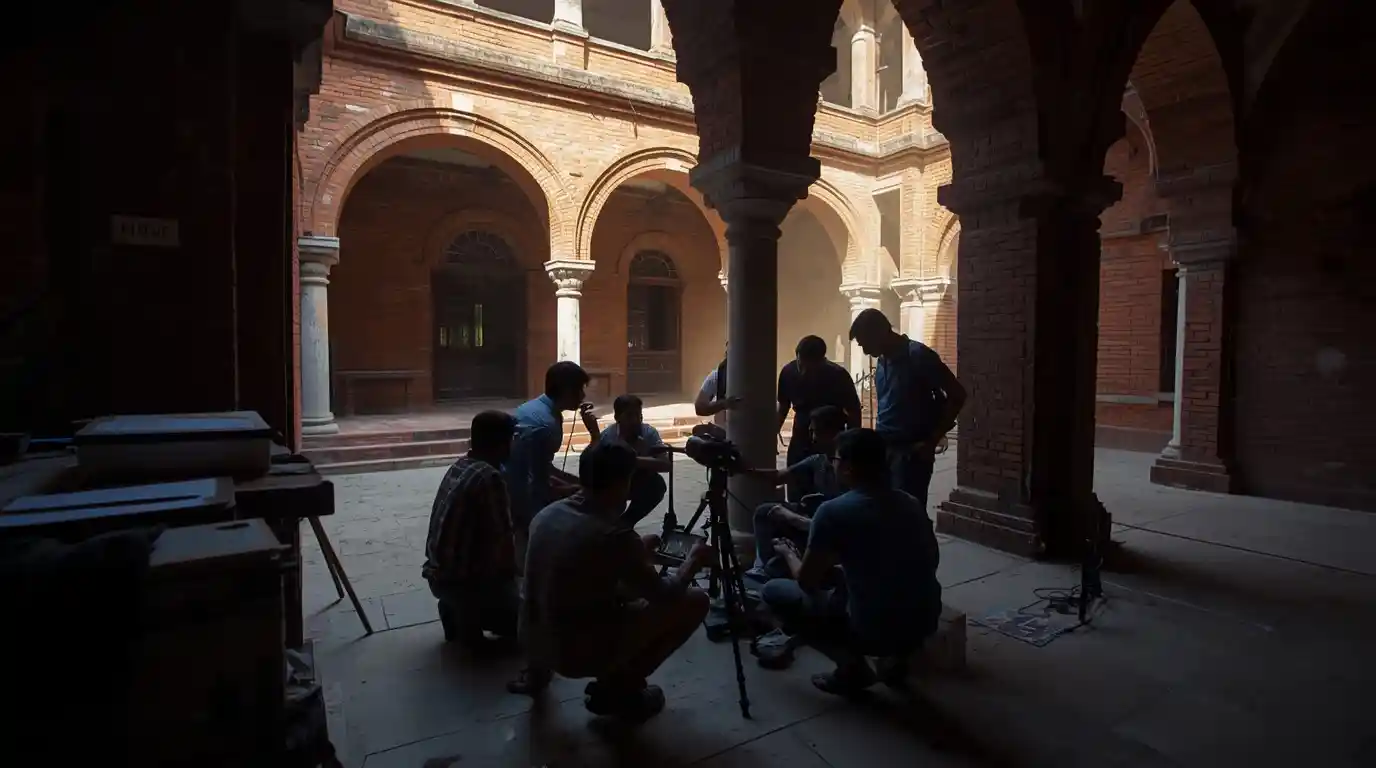
World Photography Day was marked this week at The American College in Madurai, joining campuses, camera clubs and newsrooms that treat August 19 as the profession's birthday. The Hindu reported the celebration at the 145-year-old institution. It's the kind of small campus event that happens in hundreds of places on the same date every year, and almost nobody stops to ask where the date came from.
Here's the part that rarely makes it into the speech: World Photography Day was an Indian idea. According to Digital Camera World, the photographer O.P. Sharma proposed a global photography day in 1988, and by 1991 roughly 150 photographers and organisations — the Royal Photographic Society among them — had agreed to back it. A hobbyist observance pushed from India ended up on calendars worldwide.
The timing this year carries extra weight. 2026 marks 200 years since Joseph Nicéphore Niépce made the oldest surviving photograph, a smudged view of rooftops from a window at his estate in France that needed hours of exposure. Two centuries on, the students photographing a Madurai campus were doing it with devices that fit in a shirt pocket.
Why August 19 Became the Date
The date points to Paris, not to Niépce. On 19 August 1839, the French Academy of Sciences made public the daguerreotype process developed by Louis-Jacques-Mandé Daguerre and released it, in the language of the time, as a free gift to the world. France paid for that generosity: Daguerre received 6,000 francs a year, and the estate of Niépce, his late collaborator, received 4,000.
That decision mattered more than the chemistry. Patents were the norm; open release was not. Because the process was free to copy, studios opened across Europe and in Indian port cities within a few years, and photography spread as a trade rather than a licensed monopoly.
The Indian Who Pushed for World Photography Day
Sharma was a photographer and teacher, not an institution, and his campaign had no budget behind it. He wrote to photographers and societies asking them to settle on one shared date. The consensus he built by 1991 is why a college in Tamil Nadu, a club in Kerala and a gallery in Europe all post on the same morning without anyone coordinating them.
For Indian students, that's a more useful story than the French one. It says the calendar of world photography isn't fixed in Paris or London — and that one person working the phones from Delhi managed to add a line to it.
A 200-Year-Old Picture Still Sets the Bar
Niépce's rooftop view is famous for being first, but the more instructive image came later. Daguerre's 1838 photograph of the Boulevard du Temple shows an empty Paris street — empty because a 10 to 15 minute exposure wiped out every moving carriage and pedestrian. One man stayed still long enough to register. He was having his shoes shined, and he became the first human being ever photographed, entirely by accident.
Keep that in mind the next time a phone freezes a cricket ball in flight. The distance between hold still for a quarter of an hour and burst mode at 30 frames a second is the whole history the day is about.
Why a Madurai Campus Is a Fitting Venue
The American College was founded in 1881 by American missionaries as Pasumalai College and shifted to its present Madurai site in 1903, into red-brick Indo-Saracenic buildings designed by the British architect Henry Irwin. It was among the first seven colleges in the country granted autonomy, in 1977, admitted its first woman student in 1921, and was ranked 54th among Indian colleges in the 2024 NIRF list.
Its Department of Visual Communication, set up in 2007, was the first vis-com programme in Madurai and runs both B.Sc and M.Sc courses on a self-financed basis. That's the practical reason World Photography Day lands here rather than sitting as a notice on a board — there's a department whose students shoot, edit and grade images as coursework.
How Students Can Turn One Day Into a Portfolio
An annual celebration is easy to enjoy and easy to forget. Photographers who get hired treat August 19 as a deadline instead. Three habits separate a folder of pictures from something an editor or a client will look at twice.
Shoot the Street You Actually Live On
Madurai has the Meenakshi temple, the dawn flower market and the Vaigai riverbed, and every visiting photographer shoots all three the same way. Local students hold the one advantage outsiders can't buy: time. Returning to the same corner for a month produces a body of work. A single golden-hour visit produces a postcard.
Fix the Captions Before the Filters
Picture desks reject more images for missing information than for weak composition. Who is in the frame, where, on what date, and what's happening — written down at the shoot, not reconstructed a week later. An image nobody can verify won't run, however good it looks.
Ask What the Subject Agreed To
Photographing people at work, at worship or in distress carries obligations no lens solves. Consent, especially for children and for anyone in a vulnerable moment, is the line between documentary work and extraction. It's also among the first things a serious jury or employer checks.
What to Watch for Over the Next Year
Expect the bicentenary framing to keep running, since 2026 is the 200-year mark for the first surviving photograph and archives will reference it well into 2027. If you're a student in Tamil Nadu, don't wait for next August. Enter one juried competition, pitch one publication, and print a few frames — screens flatter photographs, paper doesn't. Then bring that folder back next year with something to show.

Comments 0