

Why Acoustic Wall Panels Keep Showing Up in Your Office
Wolf-Gordon has bought wood-panel e-commerce brand Andor Willow and Dallas printer Look Walls & Interiors in under two months, a sign that the slatted-wall look has grown into serious business.

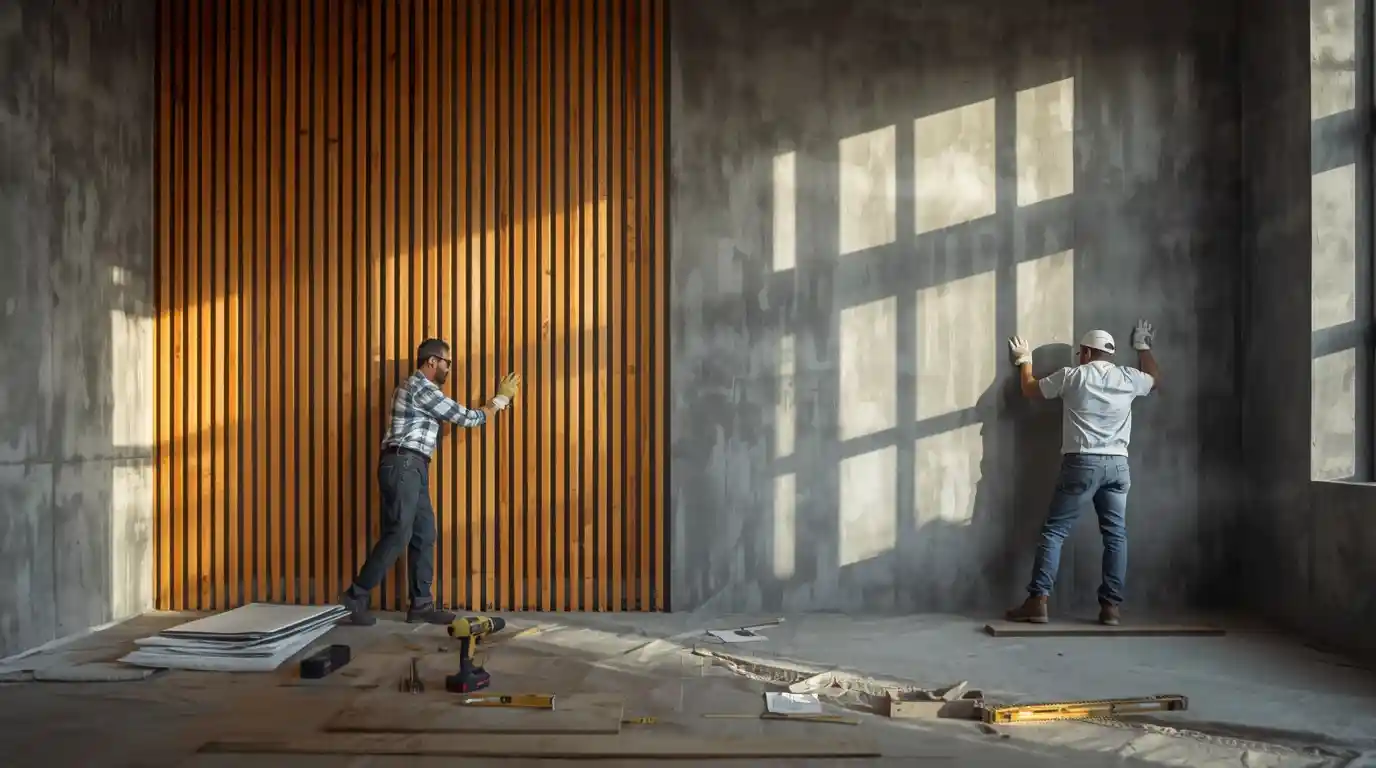
Acoustic wall panels have gone from a designer's trick to a default finish in offices, cafés and living rooms across India, and the money has finally caught up with the look. On 13 August, Wolf-Gordon, a New York surfaces company founded in 1967, said it had closed two acquisitions: Andor Willow, which sells slatted wood panels and room dividers online, and Look Walls & Interiors, a Dallas maker of custom printed wallcoverings.
Neither price was disclosed. What makes the timing striking is the pace. The Andor Willow deal was first announced on 22 June, according to officeinsight, which means Wolf-Gordon absorbed two companies in roughly eight weeks. The firm itself changed hands only recently: private equity house Charger Investment Partners, based in El Segundo, California, bought it in May 2024 from Saw Mill Capital.
So in a little over two years of new ownership, a business that spent nearly six decades selling one thing — commercial wallcovering — has turned into a three-brand group covering timber, acoustics and digital print. That shift tells you something useful about where interior budgets are actually going, and it applies as much to a Gurugram fit-out as to one in Chicago.
What the Acoustic Wall Panels Deal Actually Buys
Wolf-Gordon already sold a long list of surfaces: PVC-free wallcoverings under its CLAIR name, RAMPART wall protection, GATHER acoustical products, Scuffmaster paint, Wink dry-erase surfaces, upholstery textiles and custom work through its WG Customs Lab. The two new companies fill gaps rather than duplicate what existed. Both keep their own brand identities and their founding teams.
Andor Willow: Panels Ordered Online, Fitted Without a Carpenter
Andor Willow makes ready-to-install wood wall panels, acoustical slat systems and room dividers, and it sells them the way a clothing label does — digitally native, direct to consumers as well as to businesses. Founder Sascha Tettero-Weyman is staying on full time, with Devon Howard as chief executive. For a 1967 company built on specification sales through architects, buying an e-commerce operation is the real departure here.
Look Walls: Made-to-Order Prints Out of Dallas
Look Walls & Interiors works from a purpose-built design and production facility in Dallas, Texas, producing custom and digitally printed wallcoverings to order for hospitality, corporate, healthcare and education clients. Co-founders Lindsay White and Lester Blumenthal continue to run it. Charger describes the effect of the deal as giving Wolf-Gordon a meaningful position in digitally printed wallcovering — a segment that has grown as clients demand one-off graphics instead of catalogue patterns.
Why a 1967 Brand Wanted an E-Commerce Rival
Legacy surface companies sell through long chains: designer specifies, dealer quotes, contractor installs. Slat-panel start-ups skipped that entirely. They shipped boxes to people who had seen the look on Instagram and wanted it in a bedroom by the weekend. Rather than compete on that ground, Wolf-Gordon bought a company that already owns it.
What attracted us most to Andor Willow was a profound alignment of values built on thoughtful design and customer focus, chief executive Rick Wolf said when the June deal was announced.
On the August announcement, Wolf's stated logic was simpler still: the deals widen both the product range and the markets the company reaches. Read plainly, that means one supplier can now quote a hotel project for printed wallcovering, wall protection and timber acoustics without bringing in three vendors.

Who Is Actually Writing the Cheques
This is a private-equity roll-up, and recognising the shape matters. Charger invests in mid-sized industrial, consumer and services companies; Kimberly Pollack, its co-founder and partner, has publicly backed the Wolf-Gordon management team. The pattern is familiar — buy a stable platform, bolt on smaller specialists, sell the combined group later at a higher multiple. Two bolt-ons in eight weeks suggests the acquisition phase is running hard, not winding down.
What It Means for Interiors Buyers in India
India is not a direct market for either company yet, but the trend they are chasing arrived here first in some ways. Slatted panels are already stocked by Indian e-tailers, copied by local fabricators and specified in Bengaluru and Hyderabad office fit-outs, where hybrid work has made noise control a genuine brief rather than a nice-to-have. Consolidation abroad usually sets the specification standards that Indian projects later import.
- Check the substrate: real veneer on MDF behaves very differently from a PVC or WPC imitation in Indian humidity.
- Ask whether the acoustic felt backing is bonded across the full panel or only in strips — that is where cheap copies cut cost.
- For commercial jobs, ask for fire-performance test data in writing before the panels reach site.
What to Watch Over the Next Year
Three things are worth tracking. Whether Wolf-Gordon announces a third acquisition before the year ends, which would confirm the roll-up thesis. Whether Andor Willow's direct-to-consumer pricing survives contact with a specification-driven parent. And whether any of this reaches India through distribution partnerships rather than freight-heavy imports.
If you are budgeting a fit-out or a home renovation this quarter, the practical read is that acoustic wall panels have moved past the trend stage into an industrial supply chain. That normally means steadier quality and clearer certification, and rarely means lower prices. Lock your specification and your test certificates now, before consolidation abroad narrows what your local supplier can actually source.



Comments 0