

B.C. Crime Is Falling. Fort St. John Shootings Aren't
Three connected shootings in 23 days have Fort St. John's mayor asking the province's anti-gang unit to move north — while the rest of B.C.'s crime numbers head the other way.
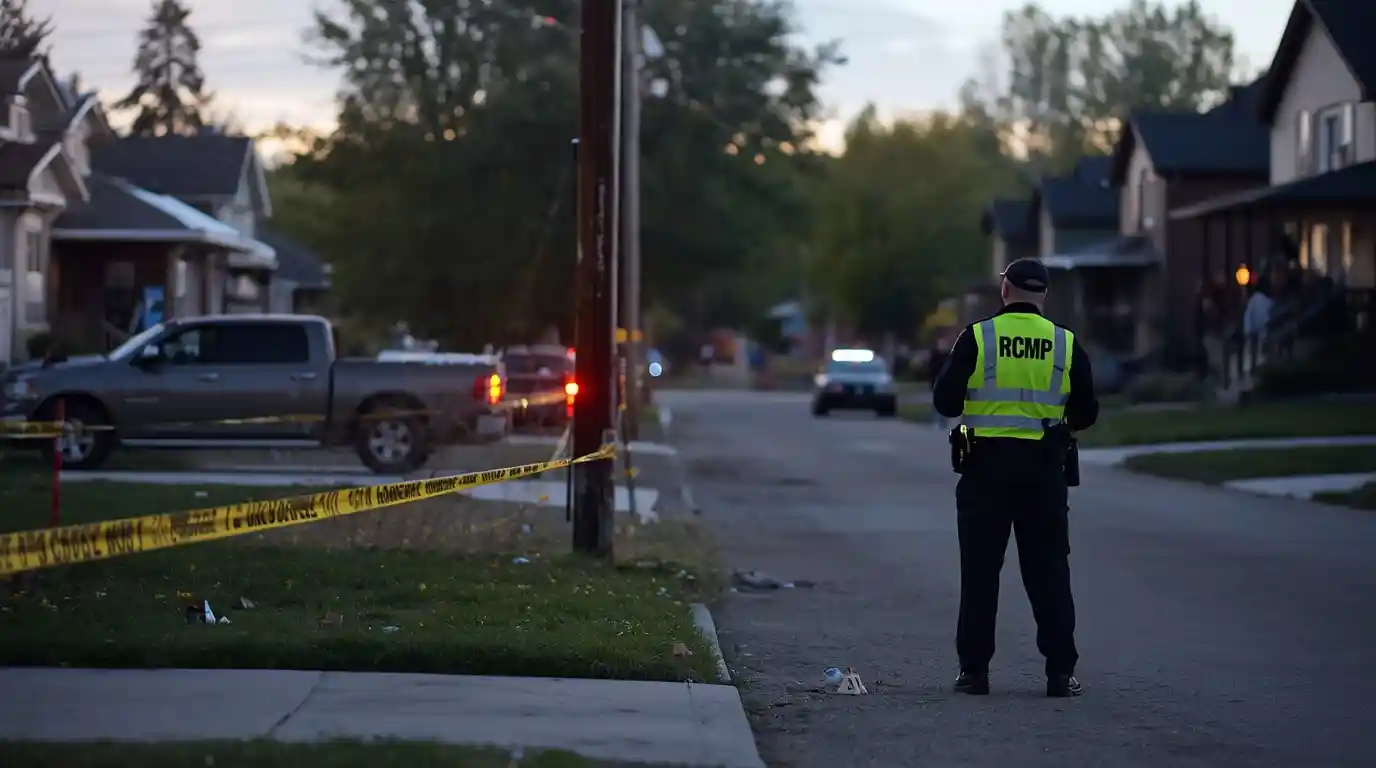
The Fort St. John shootings that have unsettled B.C.'s Peace Region since late July now number three in under a month, and Mayor Lilia Hansen has asked the province's dedicated anti-gang unit to step in. RCMP say the incidents are connected, that each one was targeted, and that they stem from an ongoing conflict over the illicit drug trade. Two of them happened near schools.
The latest came Friday night at a home in the city. Neither police nor B.C. Emergency Health Services have confirmed whether anyone was hurt. But residents on the street told CBC News they saw at least one person taken away by ambulance and believe others were injured too. RCMP say the file is now a priority investigation.
Here's the part that should stop a northern B.C. reader mid-scroll: this is happening while the rest of the province gets measurably safer. B.C.'s overall Crime Severity Index fell to a six-year low in the most recent Statistics Canada figures. Fort St. John's went the opposite way, climbing roughly 7 per cent to 182.62. Its violent crime index jumped 21 per cent.
A Timeline of the Fort St. John Shootings
Three separate calls, 23 days apart end to end, in a city of roughly 21,000 people. Laid out in sequence, the pattern police describe becomes hard to miss — same neighbourhoods, same style of attack, escalating each time.
July 22: shots fired near 112th Avenue
Just before 9 p.m., Fort St. John RCMP got reports of multiple shots fired around 112th Avenue and 108th Street, a residential pocket of the city. Officers called it targeted from the start. At least one man was hurt and later charged. Police say they recovered additional firearms at a residence tied to the file, along with evidence linking the gunfire to gang activity in town.
Aug. 6: a travel trailer, two homes and a car
Two weeks later came a drive-by. Bullets struck a travel trailer, two houses and a parked vehicle. Nobody inside was reported injured, which is largely luck — these were occupied residential properties on an ordinary summer evening. It was the second of the two incidents police have described as happening near local schools.
Friday night: the third scene in three weeks
Then Friday, gunfire at a home again. It is the third shooting RCMP have investigated since July 22, and the one that pushed the mayor to go public. Officers have not released details about suspects or a motive beyond the gang link they had already flagged.
Who the mayor is actually asking for help
The "gang task force" in question is CFSEU-BC, the Combined Forces Special Enforcement Unit — the province's standing anti-gang agency, funded provincially and staffed by officers seconded from multiple police services. Its Uniform Gang Enforcement Team is the visible arm: officers who show up in marked vehicles, pressure known players, and execute traffic stops and searches in a specific community for a defined stretch of time.
Northern B.C. has leaned on that team before. Between 2020 and 2024, CFSEU-BC's gang enforcement units deployed north 28 times — about 26 per cent of all provincial deployments, for a region with a small slice of the population. UGET officers have previously worked alongside RCMP in both Fort St. John and Dawson Creek, producing arrests and seizures.
In December 2025, CFSEU-BC launched a dedicated North District UGET so those deployments would stop being fly-in, fly-out. Whether that team lands in Fort St. John, and how long it stays, is the practical question behind Hansen's request.
Why a small city carries a big-city problem
Fort St. John sits on the Alaska Highway with high wages, a transient workforce and highway links running in every direction. That combination makes it a distribution point, not just an endpoint. CJDC-TV has reported the recent violence is tied to a broader turf conflict stretching across the Peace Region, which is why arrests in one town rarely settle anything in the next.
This isn't a first, either. CFNR Network reported that a string of gang-linked shootings in the fall of 2025 ended with the RCMP's Street Enforcement Team arresting a man found wearing body armour and carrying a loaded firearm, facing nine charges. Roughly ten months later, the shooting started again.
The property powers city hall wants next
Enforcement is only half of what the city is chasing. A Fort St. John councillor recently told CBC News that B.C. municipalities need stronger authority to go after homes used for drug and gang activity — the ability to target and, in some cases, seize the property itself rather than waiting on individual criminal files. That would take provincial legislation, not a council vote.
What to watch for over the next few weeks
Two things will tell you whether anything has actually changed. First, whether CFSEU-BC confirms a North District UGET deployment to Fort St. John with a stated duration — a two-week surge and a three-month posting are very different commitments. Second, whether the province responds to the seizure-powers ask before the fall legislative session. If you live in the affected neighbourhoods, keep dashcam and doorbell footage from those three nights; RCMP have asked for it, and in targeted-shooting files that video is often what turns a suspicion into a charge.


Comments 0