

Kitchen Gadgets Chefs Avoid, Starting With the Avocado Tool
Professional cooks keep going back to a knife, a spoon and a thermometer — and the emergency room data explains why the gadgets meant to replace them don't work.

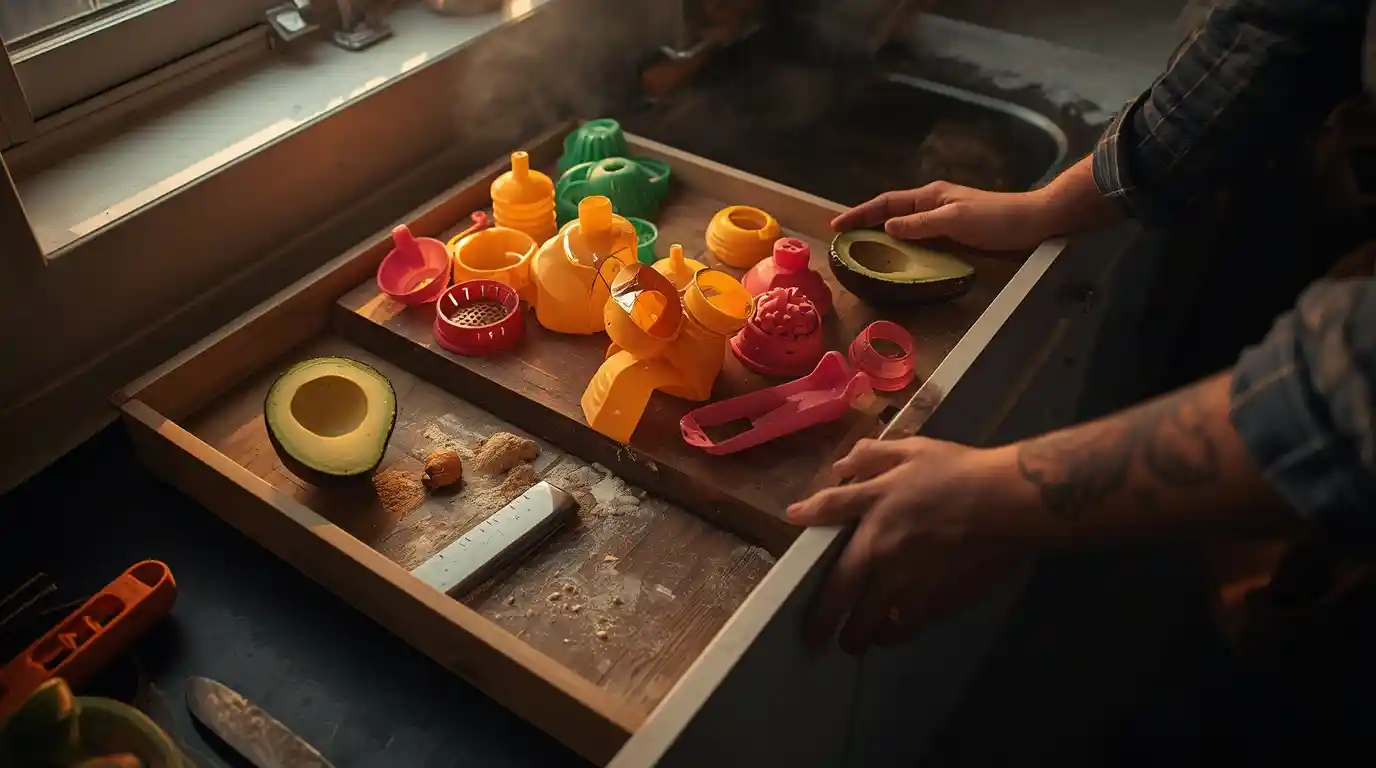
The list of kitchen gadgets chefs avoid runs longer than most home cooks expect, and it starts with the plastic avocado slicer sitting in a drawer in millions of American kitchens. Ask a line cook what they actually grab at 7 p.m. on a Friday and the answer is boring: a chef's knife, a spoon, a fork, a sheet pan. Almost nothing shaped like the food it's meant to cut.
The avocado tool is the clearest example of why. As Chowhound notes in its roundup of gadgets not worth buying, the slicer only performs on fruit that's already perfectly ripe and soft — the exact avocado you don't need help with. On an underripe one it skids. And it does nothing about the pit, which is the step that sends people to urgent care.
That matters more than a decluttering argument, because the injury numbers are real. Research published in The American Journal of Emergency Medicine estimated 50,413 avocado-related knife injuries treated in U.S. emergency departments between 1998 and 2017. The trend line is steep: roughly 3,143 cases across 1998–2002, compared with 27,059 across 2013–2017. Guacamole got popular faster than knife skills did.
The Kitchen Gadgets Chefs Avoid Most
The complaints are consistent across professional kitchens, and they're rarely about snobbery. A tool that does one job takes up the same drawer real estate as one that does twenty, and most of them are worse to wash than the knife they replaced. Alton Brown built a career-long crusade against what he calls unitaskers; Anthony Bourdain took the same view of the garlic press.
- Garlic press — messy, slow to clean, and it bruises more than it cuts
- Herb strippers and herb scissors — your fingers already do this
- Plastic spiralizers — they stain, and they shred soft vegetables
- Meat shredding claws — somehow dirtier than using two forks
- Avocado slicers — only work on the easy avocados
- Electric knives — loud, uneven, hard on the texture of roast meat
- Banana slicers and burger patty molds — the punchlines of the category
None of these are expensive on their own. That's the trap. Ten or fifteen dollars a piece feels harmless, until you've spent more on the drawer than you would have on one knife you'd use every single day for a decade.
What to Buy Instead of the One-Trick Tools
The replacements aren't purchases so much as techniques. In most cases you already own the better tool and just haven't been shown the move.
For Garlic, Use the Flat of the Blade
Lay a chef's knife sideways over a clove, press down with the heel of your hand, and the skin slips off in one piece. Chop from there. You get real texture control — coarse for a braise, near-paste for a vinaigrette — and there's one blade to rinse instead of a hinged basket full of stuck pulp.
For Avocados, a Knife and a Spoon
Halve the fruit, then set it cut-side down on the board before dealing with the pit. Scoop the flesh with a spoon. Emergency physicians have pushed this for years precisely because the classic injury happens when someone holds the avocado in one palm and swings a blade at the seed.
For Shredded Chicken, Two Forks or a Bag
Meat claws are the purest unitasker on the list. Two forks work, and a zip-top bag worked by hand works faster on warm chicken. If you shred large batches often, the paddle on a stand mixer will do a whole tray in about fifteen seconds.

The Avocado Numbers Nobody Prints on the Box
Put the injury data in perspective and the case against the gadget gets stronger. One analysis found avocados account for roughly one in every 50 knife injuries reported to federal regulators, with about 8,900 emergency visits in 2018 alone — near 24 a day nationwide. OSF HealthCare cites a similar annual figure in its own warnings to patients.
The demographics are lopsided too: women made up 80.1% of the injuries in the journal study, with women aged 23 to 39 the single largest group. Roughly half the wounds were to the hand and half to a finger. A slicer that requires a soft, ready fruit simply doesn't intervene at the moment the damage happens.
The One Tool That Earns Its Drawer Space
If you're going to buy something, buy a digital instant-read thermometer. The USDA's Food Safety and Inspection Service is blunt about this: a food thermometer is the only reliable way to know a piece of meat has reached a safe internal temperature. Color, firmness and clear juices are all guesses, and they're the guesses that dry out chicken breasts.
The target for poultry, whole or ground, is 165°F. FSIS also steers cooks toward digital models over dial ones, which drift and read slowly. Insert into the thickest part, away from bone and fat. It's the rare tool that both improves the food and removes a genuine risk — the opposite of a novelty slicer.
Where the Pros Actually Disagree
This isn't unanimous. Chef Yotam Ottolenghi is on record as a garlic press defender, and plenty of working cooks keep one for speed on weeknights. Chicago chef Carrie Nahabedian, who spent nearly 12 years as an executive chef at Four Seasons before co-running Brindille, frames the question differently: before buying any small appliance, ask honestly how often you'll use it once the phase passes.
So run that test on your own kitchen this week. Pull the drawer out, and set aside anything you haven't touched since last year. If a gadget only handles one ingredient, only in one condition, and takes longer to clean than the knife would have taken to use, it's not saving you anything. Put the money toward a thermometer and a sharpening steel instead.



Comments 0