The Amit Shah Parliament Debate That Never Started
Amit Shah offered the Opposition a full day to ask him anything about the Jantar Mantar student firing — and they walked away from the table.

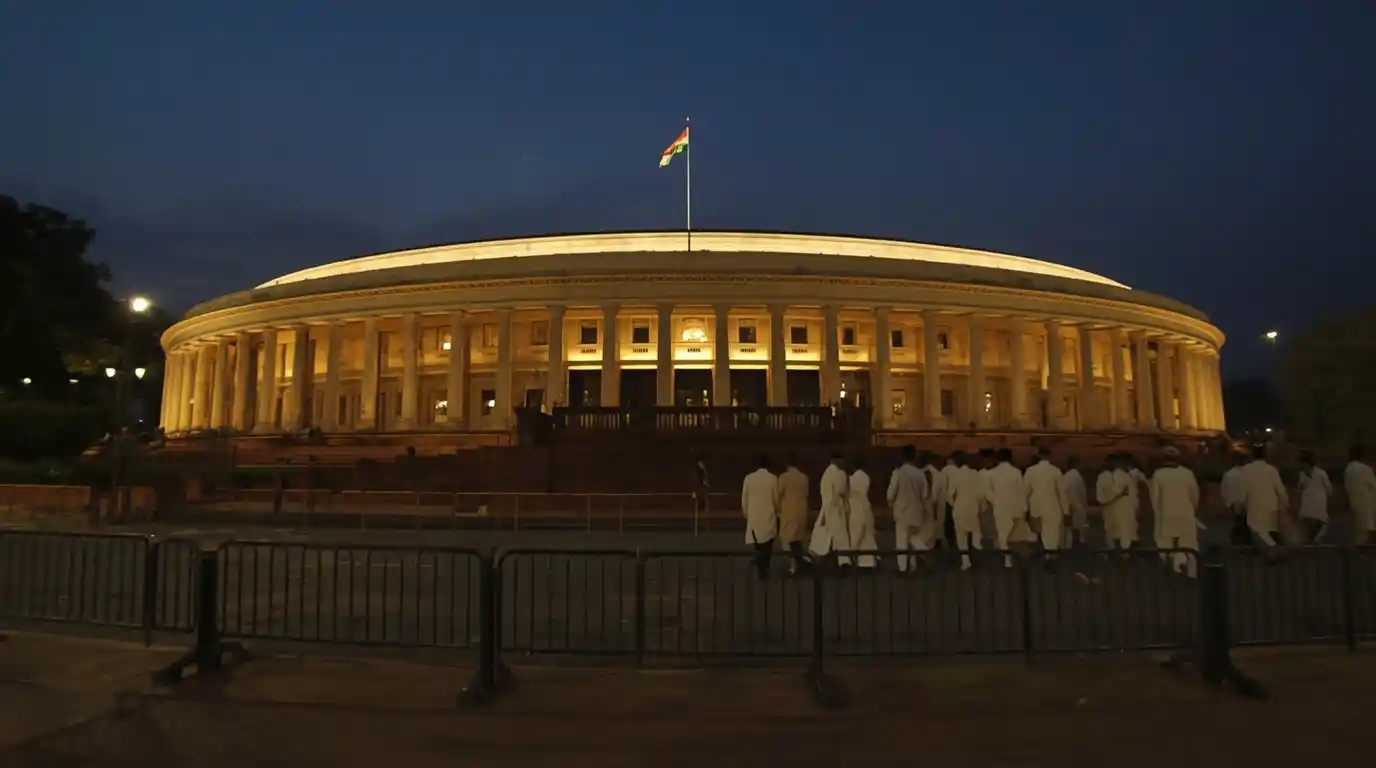
An Amit Shah Parliament debate that could have run a full 24 hours never happened on August 12 — and the reason had nothing to do with the clock. The Union Home Minister stood up in the Lok Sabha and told the Opposition to name the time: start at 3 p.m., go till 3 p.m. the next day, ask him anything. All they had to do was send one letter to the Speaker. They refused.
What they wanted instead was an answer to a single question — who ordered the police action against students near Jantar Mantar on July 20. That protest ended with more than 80 people in hospital. One of them, a 19-year-old named Sahil Lochab, had metal pellets removed from his eye; doctors told his family there was roughly a 1% chance of saving the sight in it, according to The Hindu.
So the two sides spent a third straight day talking past each other. Shah kept saying he was ready to answer everything. Rahul Gandhi kept saying he didn't want a lecture — he wanted accountability. Behind the noise sits a monsoon session that has barely functioned, snarled by parallel fights over Bihar's voter-roll revision, the Pahalgam attack and Operation Sindoor.
What the Amit Shah Parliament Debate Offer Was
Shah's proposal was oddly specific. If Opposition MPs submitted a written request to Speaker Om Birla by 2 p.m., the House could begin the discussion at 3 p.m. that Wednesday and carry it through to 3 p.m. on Thursday. He offered to set aside Question Hour if the Speaker agreed, and promised to sit through the whole thing and reply to every point raised. In effect, he handed the Opposition a full day of floor time and dared them to use it.
Why Rahul Gandhi Said No
Rahul Gandhi, the Leader of the Opposition in the Lok Sabha, wasn't buying it. He said Shah had been "missing for the last 20 days" and had "no courage to come to the House." For him, the Amit Shah Parliament debate on the table was a way for the government to burn hours with speeches rather than name the person who gave the firing order.
"We are interested in knowing who gave that order to shoot our students. If he gave that order, he should resign because he is culpable. If he did not give the order, he should resign because he is incompetent."
The Jantar Mantar Firing, Explained
To see why a debate offer wasn't enough, you have to look at what is actually in dispute — and how little of it the two sides agree on.
What Happened on July 20
Hundreds of protesters set off from the Mandi House area towards Jantar Mantar. Police moved to block them, and the day ended with more than 80 injured people spread across RML Hospital, Lady Hardinge Medical College and AIIMS. That much isn't really contested. What is contested is how the crowd was pushed back.
The Pellet-Gun Dispute
Delhi Police have flatly denied firing pellet guns, calling the claim false and misleading. But a medical report from Safdarjung Hospital recorded pellet wounds on at least one protester, and a police-station diary entry logged two rounds of plastic pellets fired that day, alongside dozens of other shells and tear-smoke rounds by the Rapid Action Force. A blanket denial on one side, and paperwork on the other — that gap is the whole argument.
One Student's Eye
Sahil Lochab puts a face on the numbers. The 19-year-old went through surgery to remove pellets lodged in his right eye, and the prognosis his family was given — about a 1% chance of restoring vision — is the kind of detail that turns a procedural row into something people genuinely feel. That is exactly why the Opposition won't let the whole thing shrink into a scheduled, time-boxed debate.
How the Session Got Stuck
This pattern isn't new. In the 2023 monsoon session, as the Opposition stalled proceedings over Manipur, Shah likewise said he was ready to discuss the issue in the House — and that session, too, mostly dissolved into adjournments. The choreography is familiar: the government offers a debate on its terms, the Opposition demands one answer first, and neither side blinks. This time the backdrop is heavier, with simultaneous rows over the Special Intensive Revision of Bihar's electoral rolls, the Pahalgam attack and Operation Sindoor all feeding the gridlock.
What to Watch Next
The immediate question is whether the Opposition actually writes that letter to Om Birla. If it does, a marathon debate could still take place; if it doesn't, expect more adjournments until the session simply runs out. If it doesn't, the Amit Shah Parliament debate floated on August 12 will be remembered as an offer nobody took. Beyond the shouting, watch two things: whether the inquiry into the July 20 firing ever names a decision-maker, and whether the contradiction between police denials and hospital records is settled on the record. That, not the promise of floor time, is what decides who was telling the truth.