

The Indian Teacher Behind World Photography Day
Visakhapatnam marked the day with hundreds of prints on public walls — but the global observance itself was argued into existence by a photography teacher from India.
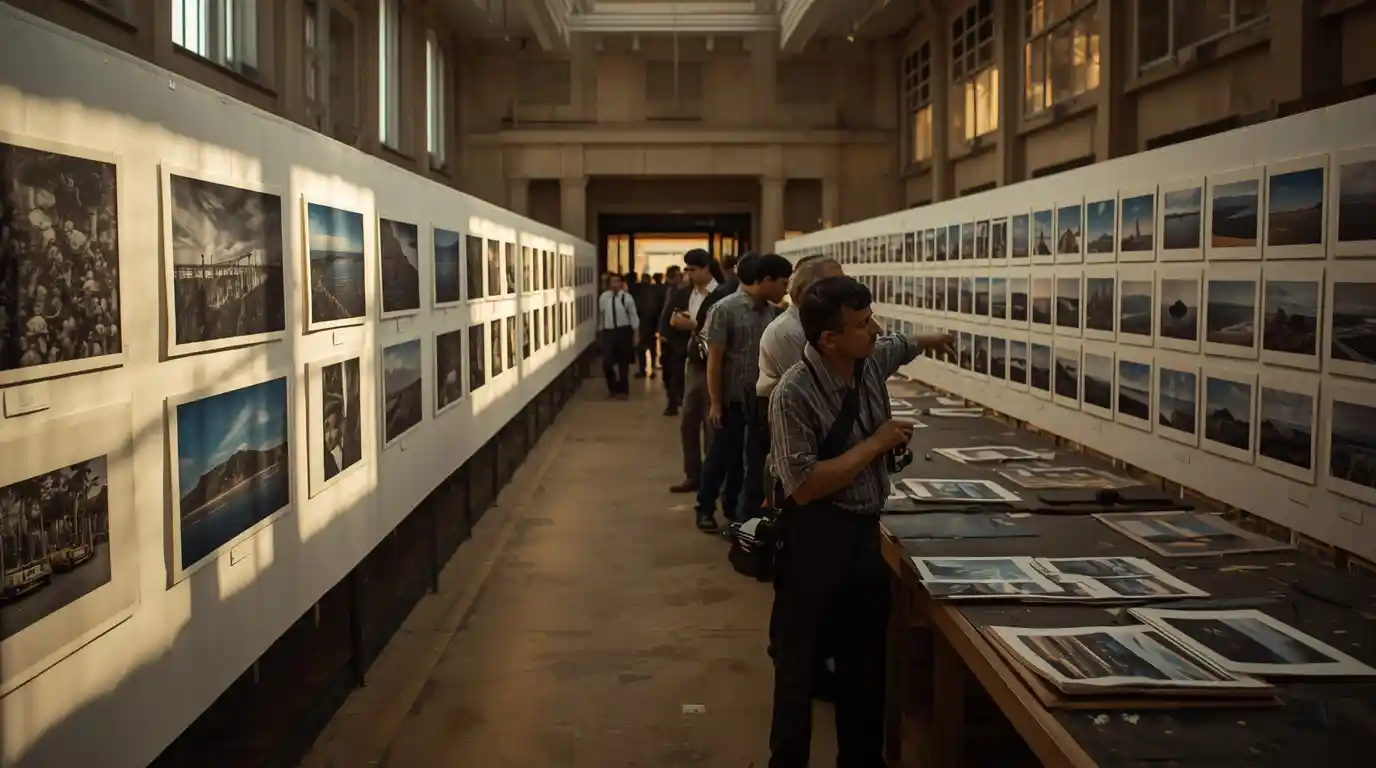
World Photography Day turned Visakhapatnam into a small gallery circuit this week, with prints going up on public walls and officials walking the rows. The Hindu reported that the Greater Visakhapatnam Municipal Corporation commissioner inaugurated a photo exhibition to mark the occasion. Social News XYZ reported a separate show by the Waltair Photographic Society at the Andhra University Seminar Hall, carrying more than 300 photographs, on Wednesday, 19 August.
Here's the part almost nobody mentions while the ribbon is being cut. The date comes from France in 1839. But the idea of turning it into a worldwide celebration came from an Indian photography teacher, O.P. Sharma, who proposed it in 1988. The first observance followed in 1991. He is credited alongside two other photographers, Korske Ara and John Morzen.
That matters for a city like Vizag, where the day has become a fixture rather than a novelty. A local camera club booking a university hall in August isn't importing a foreign trend. It's continuing an argument an Indian educator started nearly four decades ago, back when film cost real money and a wasted frame genuinely hurt.
Two Vizag Shows, More Than 300 Prints
Three hundred photographs is a serious hang. Most club exhibitions in tier-two Indian cities run to 60 or 80 frames, because printing, mounting and hanging costs come out of members' pockets. Clearing 300 means either a large membership or a long open call. It also means a visitor needs a good 40 minutes to actually see the show rather than drift past it.
Compare it with last year. In August 2025, the Vizag Photo Journalists' Association ran a two-day exhibition at the Visakha Museum on Beach Road, opened by GVMC commissioner Ketan Garg, with association president Y. Ramakrishna presiding and zonal commissioner Siva Prasad present. Photojournalists who had won at a competition in Vijayawada were felicitated the same evening. Different organisers, different venue, same week every year.
Where World Photography Day Actually Comes From
The origin story gets compressed into one line in most coverage, and the compression loses the interesting bits. There are really three moments: a French announcement, an Indian proposal, and an internet experiment. Each one added something the others couldn't.
France Gave the Daguerreotype Away in 1839
Louis Daguerre began the work in 1829 with Joseph Nicephore Niepce, who died in 1833. Daguerre carried on alone and refined the process that took his name. On 19 August 1839, the French government announced it and published full working instructions as a gift to the world — with Britain pointedly excluded, where the process stayed under patent.
An Indian Teacher's Idea in 1988
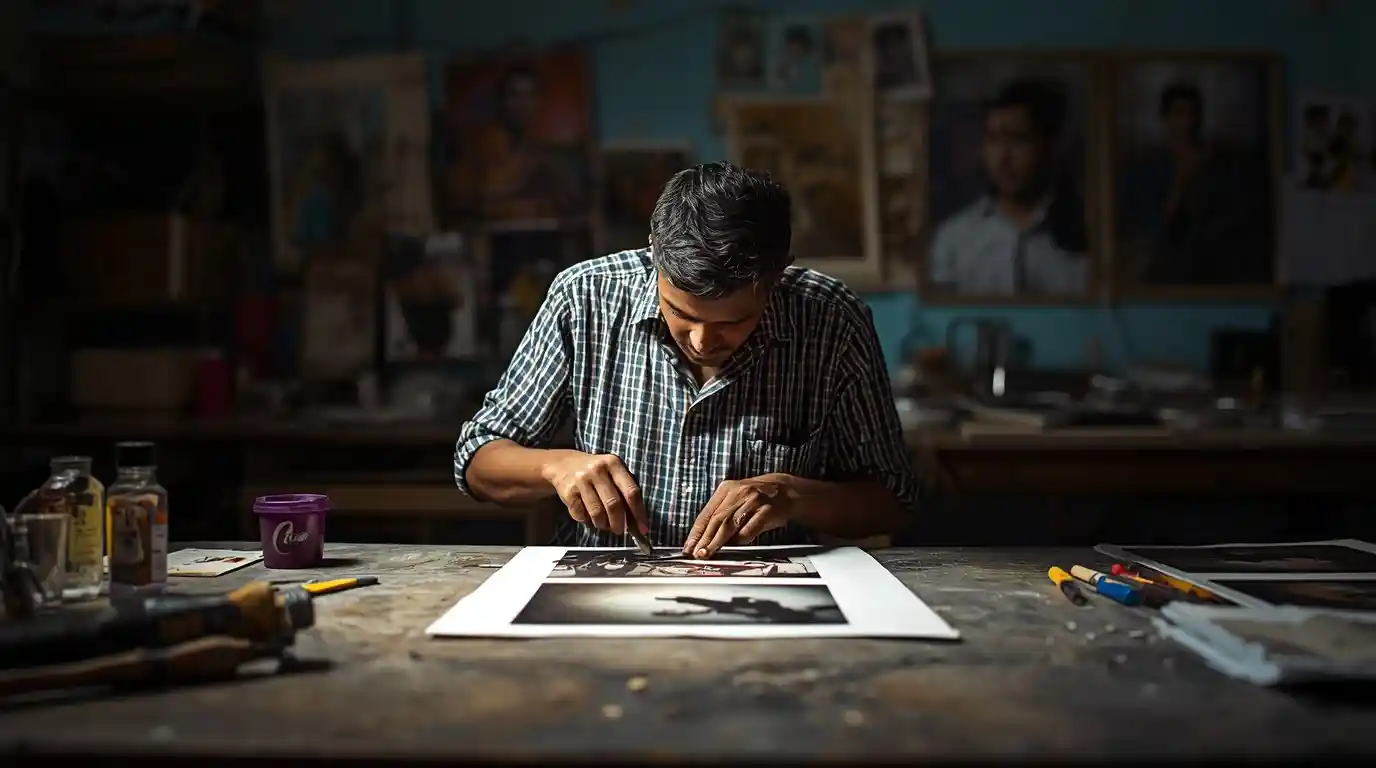
A date on a calendar isn't a celebration. Sharma, a photography teacher, spent years pushing for a single global day when photographers everywhere would mark the craft together. The first observance came in 1991, long before social media could carry it. For Indian photographers, that's a quiet piece of ownership worth knowing on a day widely assumed to be European.
The 2010 Gallery That Went Global
On 19 August 2010, the first World Photography Day online gallery went live. Roughly 270 photographers shared work, and visitors came from more than 100 countries. Modest numbers by today's standards — a single reel outperforms that in an hour. But it proved the day could travel without an institution behind it, which is why small clubs now anchor it locally.
What a City Commissioner Sees on a Photo Wall
Civic officials open a lot of exhibitions, and the speeches usually blur together. The 2025 Vizag opening produced something sharper. After walking the show, Ketan Garg described it in terms of the city itself rather than the art, according to Yo! Vizag.
I had a great feeling after watching the exhibition. Besides reflecting the development of the city, it also highlights the issues which need attention.
That second clause is the whole case for photojournalism in one sentence. A wall of prints is a civic audit that a municipal chief cannot scroll past. Broken footpaths, choked drains, eroding beachfront — a photograph puts them at eye level, in a room, in front of the person with the budget.
Why 187 Years Still Fits in Your Pocket
Daguerre's process needed minutes of exposure and a chemically treated silver plate. Your phone does the same job in a fraction of a second, for free, several times a day. The barrier moved from equipment to attention. Almost nobody now lacks a camera — what people lack is the habit of looking hard at their own street.
How to Get Your Own Work on a Wall
If a Vizag exhibition made you want to print something, the route in is more open than most people assume. Club shows run on submissions, not invitations, and they need volume every August. A few practical steps for the next cycle:
- Follow the organisers — groups like the Waltair Photographic Society and the Vizag Photo Journalists' Association announce open calls weeks ahead, usually on social pages rather than websites.
- Budget for printing. A decent A3 print with mounting typically runs a few hundred rupees per frame, and most club shows expect you to cover your own.
- Shoot local. Selection panels favour recognisable places over generic landscapes, and civic subjects travel further than sunsets.
- Keep the file large. Phone images print fine at A4 or A3 if you avoid heavy cropping and shoot in good light.
Watch for next August's announcements from both Vizag groups, which usually surface in the last week of July. If you want to be on the wall rather than in front of it, start shooting your own neighbourhood now — the frames that get selected are almost always taken months before anyone mentions the deadline.
Comments 0