

Why Two Millionaires Built the Tallest Virgin Mary Statue
A childless-of-fanfare farming village in central Poland now hosts a 182-foot Marian monument paid for entirely by one local couple.

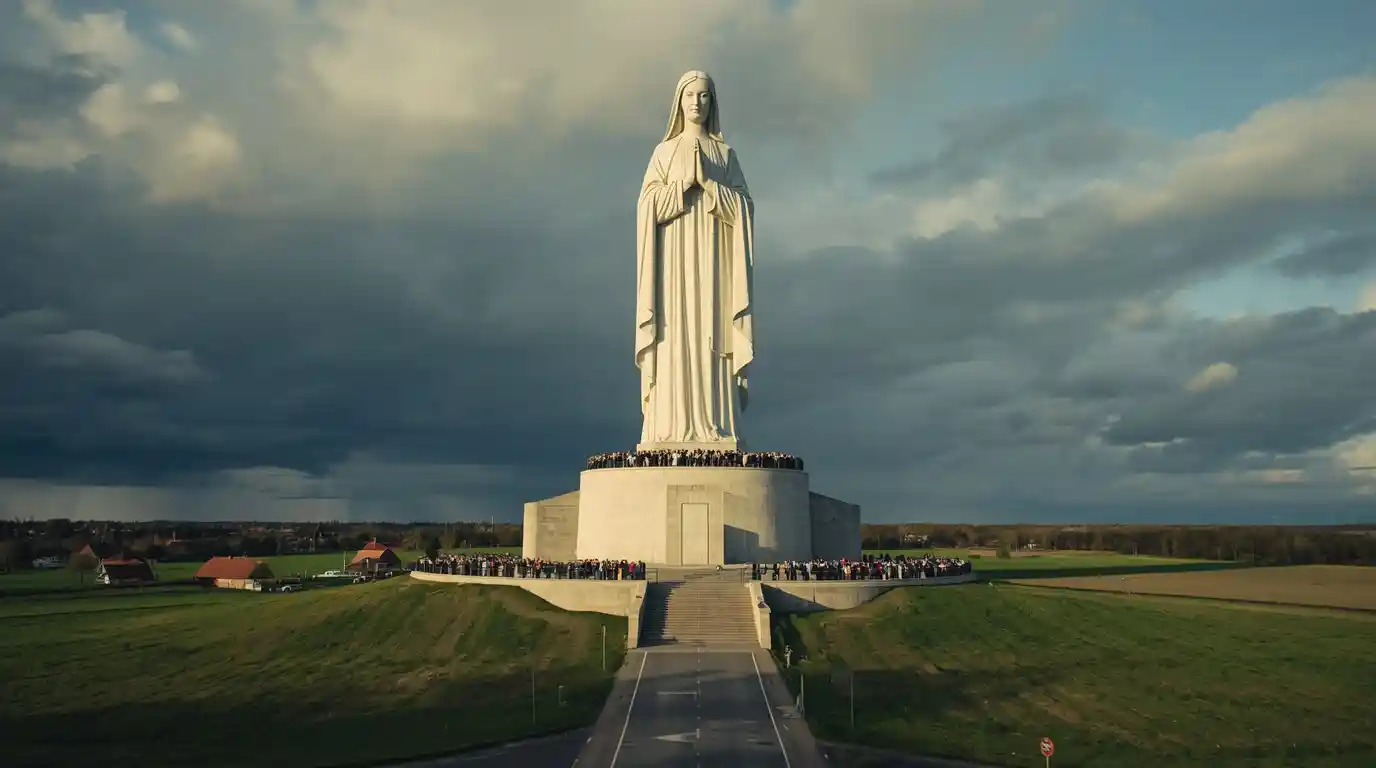
Europe's tallest Virgin Mary statue now looks out over a Polish hamlet where roughly 130 people live. The figure went up in Konotopie, in central Poland, and reaches 55.6 metres — about 182 feet — from the ground to the top of its head. That number includes a crown-shaped pedestal 15 metres high, with a public viewing deck built inside it that costs nothing to enter.
It was consecrated on August 15, the Feast of the Assumption, in front of hundreds of people. Priests in white robes celebrated Mass, the Mazowsze folk ensemble performed, and helicopters scattered miniature red roses over the crowd. Bishop Krzysztof Wętkowski led the consecration. Lech Wałęsa, the Solidarity electrician who became Poland's president, showed up at 82.
Here's the part that lifts this above roadside-attraction news: no diocese, no government grant and no parish fundraiser paid for it. One local couple wrote the checks. Roman and Grażyna Karkosik covered a reported 100 million zloty — roughly €23 million, or about $27 million — and have described the monument as their thanks to God.
What 182 Feet of Concrete Looks Like
The figure is concrete and steel, and it took about 18 months to build, according to Notes from Poland. For an American sense of scale: the Statue of Liberty measures 151 feet from heel to torch. Mary in Konotopie is taller than Liberty herself, though Liberty's granite base pushes her combined height past 300 feet.
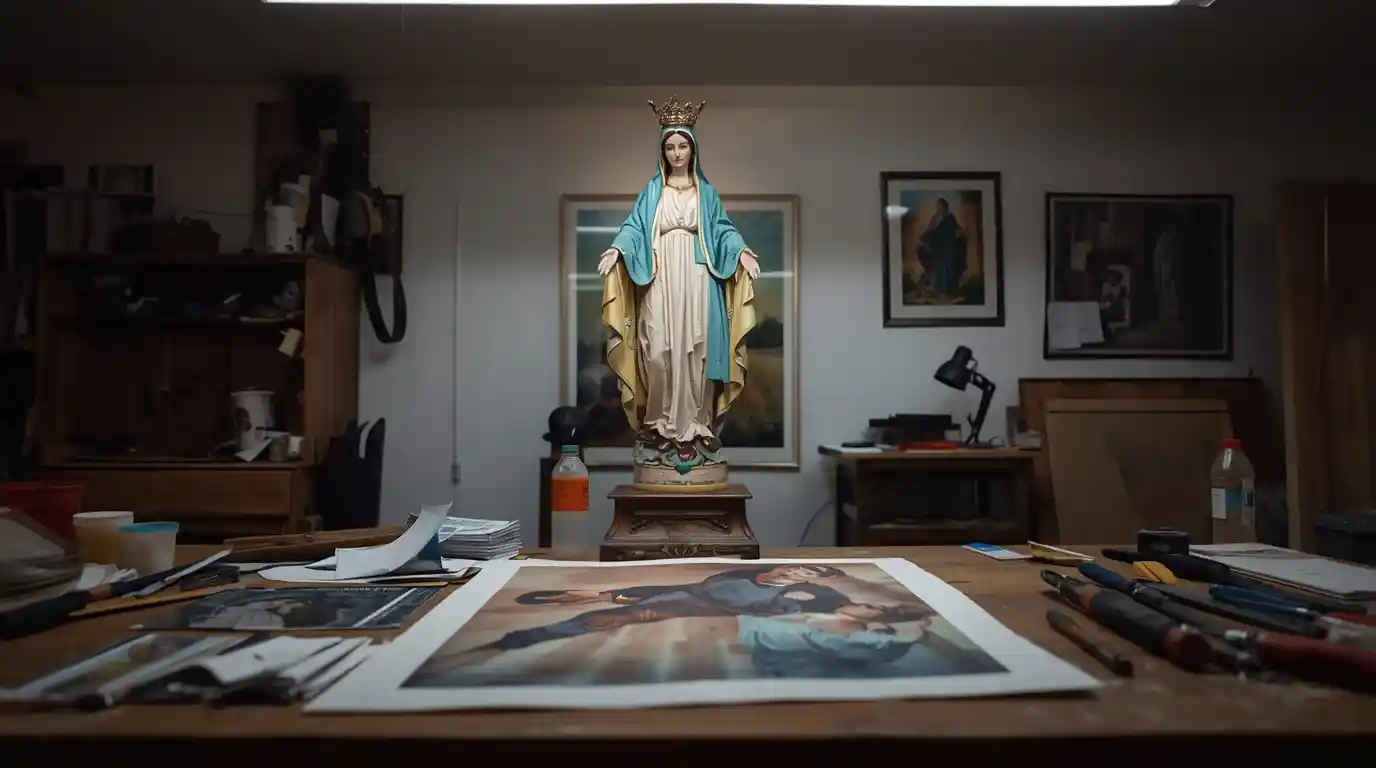
The design began at desk size. Sculptor Adam Jakub Matejkowski first produced a two-metre model, and Bartłomiej Niesłuchowski served as chief engineer on the build. Visitors climb to the platform 15 metres up in the pedestal and look out across flat farmland in every direction. There's no ticket booth, which fits a village that has never needed one.
Who Paid for the Tallest Virgin Mary Statue
Most monuments this size are committee projects — years of appeals, matching grants, a bishop's blessing on the budget. This one skipped all of that, which explains both how fast it appeared and why it looks the way it does.
A Fortune Made in Poland's Wild 1990s
Roman Karkosik built his money during Poland's post-communist scramble, starting with plastic-bottle manufacturing and then buying undervalued companies as the Warsaw Stock Exchange found its feet. By the early 2000s he ranked among the country's richest people. He and Grażyna live near Konotopie, so this is a hometown project, not a distant donor's gesture.
The Brief Was Simple: Beat Świebodzin
Matejkowski told the Polish edition of Forbes that the couple asked specifically for something taller than the Christ the King statue in Świebodzin, western Poland. That 2010 monument made Poland a minor player in the global colossus league. Konotopie was designed from the start to outrank it, and the finished numbers show the brief was met.
What 100 Million Zloty Buys in a Village of 130
Divide the reported cost by the population and you get north of $200,000 per resident. Put another way, the statue cost more than most American towns of that size spend on everything — roads, water, schools — across a decade. That arithmetic is the whole argument, for supporters and skeptics alike.
How It Compares to Rio, and to Montana
Christ the Redeemer above Rio de Janeiro stands about 38 metres, or 125 feet, counting its pedestal. Świebodzin's Christ figure is 33 metres and reaches roughly 52 metres with the mound beneath it. The world record still belongs to the Philippines, where the Mother of All Asia rises 98.15 metres, and Indonesia unveiled a 61-metre Jesus in 2024.
The closest American reference point is Our Lady of the Rockies, the 90-foot Mary standing on the Continental Divide above Butte, Montana. Butte residents built theirs by hand over six years, from 1979 to 1985, after Bob O'Bill promised a statue if his wife survived cancer. Konotopie's Mary is twice as tall and went up in a year and a half.
A Giant Statue in a Country Leaving Church
Just over 70% of Poles still identify as Catholic, but Sunday Mass attendance sits near 30% and keeps sliding, especially among the young. That gap is the backdrop here. Poland is building its largest religious monuments at the exact moment its pews are emptying, and the two facts are not unrelated.
We sinners ask Our Lady of Mercy to take care of the whole nation.
Wałęsa's line at the ceremony landed as both prayer and diagnosis. Critics in Poland have asked whether $27 million of private money might have done more good elsewhere. Supporters answer that it's private money, freely given, and that pilgrimage sites have paid for themselves for centuries.
What to Watch in Konotopie Next
The practical question is infrastructure. Local authorities expect pilgrims and tourists, but a settlement of 130 has no hotels, little parking and country roads never sized for coach traffic. Watch whether the Włocławek diocese formally designates the site a shrine, which would bring organized pilgrimage calendars, and whether Kikoł and neighboring towns fund access upgrades.
If you're planning a Poland trip, this is a detour rather than a destination for now: about two hours northwest of Warsaw, free to enter, best paired with Toruń or Włocławek. Go in the next year if you want it quiet. Give it two summers of viral photos, and the empty fields around Mary will look very different.
Comments 0