

Why Winning These Street Photography Awards Pays Just US$500
Eight photographers beat 1,582 entries from 50 countries to win the Pure Street Photography Awards 2026 — and the grand prize cheque is smaller than a second-hand lens.
The Pure Street Photography Awards named eight winners this month, and the two grand prize photographers each collected US$500 — well under A$1,000, and less than most people pay for a decent second-hand lens. To get there they beat 1,582 entries submitted from 50 countries. The gap between the prestige on offer and the size of the cheque is the part nobody puts in the press release.
The winning frames earn the attention. Chris Mozyro of the UK took first place in black and white with Royal Navy submariners unwinding in a Westminster pub. Cesare Simioni, based in Brazil, won that category outright with Soul Beneath the Paint, shot at the Lambe Sujo and Caboclinhos festival in Sergipe. The Guardian, whose head of photography judged one of the two categories, led its own gallery on sailors, shadows and a dog in a dress.
So why should anyone in Australia care about a contest judged in Europe and hung in India? Because entries for this country's biggest photography prize close this Sunday night, and the money involved sits in a different universe — a pool worth more than A$80,000. Same genre, same weekend shooters, wildly different economics.
Who Won, and Where They Pointed the Camera
The contest splits into two streams, black and white and open, with four places awarded in each. What links the winners is timing rather than gear: almost every frame depends on a half-second that would have looked like nothing a moment earlier or later.
The black-and-white winners
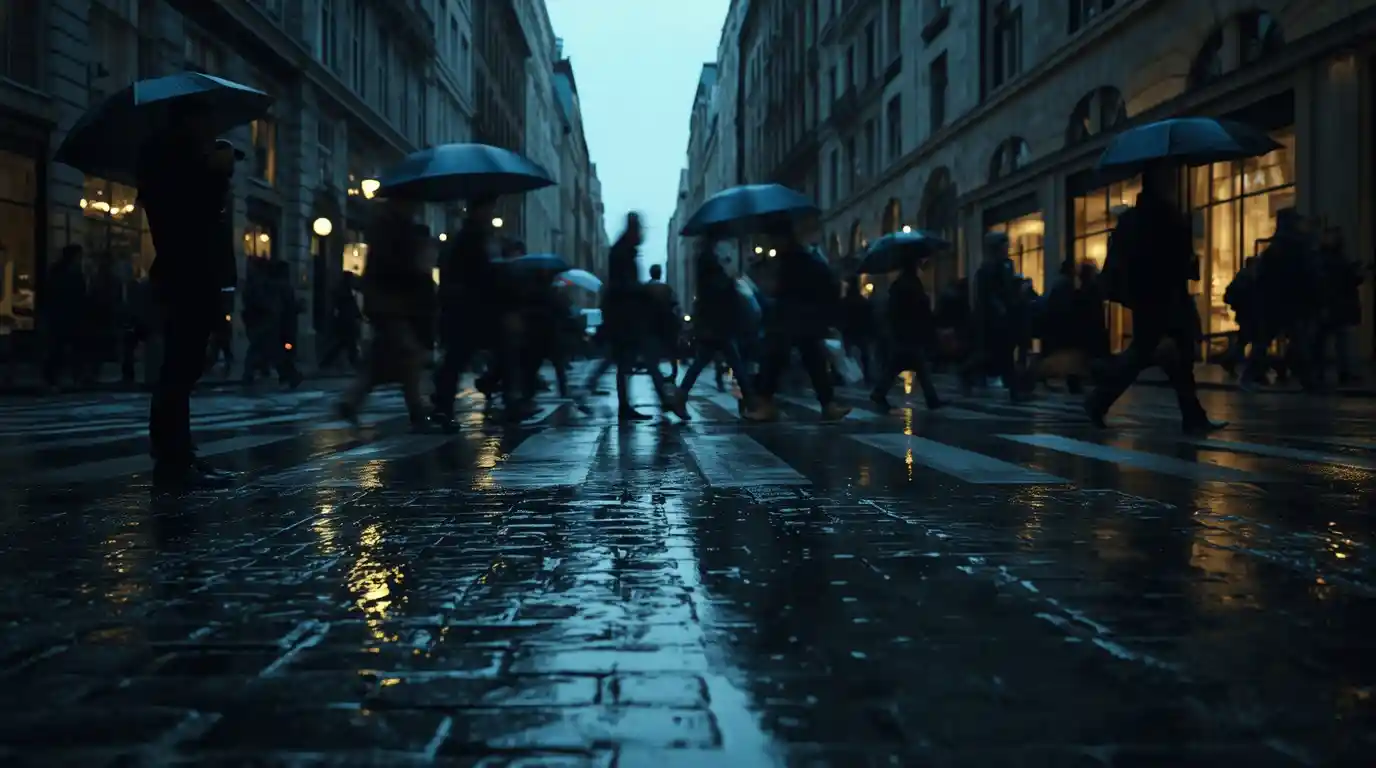
Simioni took the grand prize, with Mozyro's submariners in second position overall. American photographer Jonathan Varjabedian placed second with Untold Story, made on the New York subway, and France's Sven Delaye came third with a rainy street scene from San Cristóbal de las Casas in Mexico. Varjabedian has said that strong street work tends to hold onto its ambiguity rather than explain itself.
The open category winners
Daniel Kashi of France won the grand prize for Chantilly June 2025, taken at the Prix de Diane, one of the country's grandest horse races. Italy's Leone Von Dizic placed first with Threshold, from a religious procession in the south. Taichi Naitou of Japan came second with a selfie moment at Tokyo Station, and Marco Cajazzo took third inside the Cathedral of Catania.
Why These Street Photography Awards Pay So Little
The organisation behind the prize was founded in 2020 by photographers Dimpy Bhalotia and Kamal Kumaar Rao, and it now claims a community of more than 300,000 photographers and enthusiasts. That scale is the actual currency. A US$500 cheque buys nothing much; a credit that travels through Colossal, PetaPixel, Forbes and the Guardian in a single week is worth considerably more to a photographer with no gallery representation.
The other payoff is wall space. A shortlist of 158 images goes on show at Jawahar Kala Kendra in Jaipur from 20 to 22 November, billed as India's largest dedicated contemporary street photography exhibition. For an unrepresented shooter, a printed frame in front of thousands of visitors is a harder thing to buy than a cash prize.
A Guardian Photo Chief Picked the Open Winners
Fiona Shields, head of photography at the Guardian, judged the open category. The black-and-white stream went to Rui Palha, a Portuguese street photographer with a long international following. That pairing explains a lot about the results — one editor trained on news pictures, one practitioner steeped in the genre's own traditions.
Street photography begins with honesty. It doesn't wait for perfection or performance. — Dimpy Bhalotia
What Australians Can Enter Before Sunday
The Head On Photo Awards, run out of Sydney, close at 11.59pm Sydney time on Sunday 16 August. Street work doesn't get its own bracket; it sits inside the Exposure category, alongside fine art, sport, travel, architecture and everything else that isn't a portrait or a landscape. Entries are open worldwide, and judging is done blind.
- Prize pool shared by three category winners: more than A$80,000
- 110 finalists shown in curated print and online exhibitions, plus a hardcover catalogue
- 200 semi-finalists in a digital exhibition at a festival venue
- Judges see the picture only — no name, no CV, no follower count
That blind process matters more than it sounds. Plenty of open competitions quietly reward a recognisable name. Removing the metadata puts a first-time entrant from Footscray on the same footing as someone with a decade of bylines, which is exactly the argument for spending an evening going through your camera roll.
What to Check Before You Hit Submit
Read the file specs before anything else — resolution and colour profile rejections kill more entries than weak pictures do. Then be honest about the edit: judges in this genre penalise heavy manipulation, and a cropped, straightened frame usually beats a filtered one. If Sunday is too soon, the 2027 Pure open call is already live, so there's a second door. Either way, the deadline this week is the one with the money behind it.
Comments 0